Introduction
Every day you care for babies and children. Knowing what to do in an #emergency helps keep them safe. This article answers simple, clear questions about preparing for and handling infant and #child emergencies. It is written for directors and child care providers. Use the tips here with your policies and training. Remember: state requirements vary - check your state licensing agency.
Why does infant & child emergency response matter?
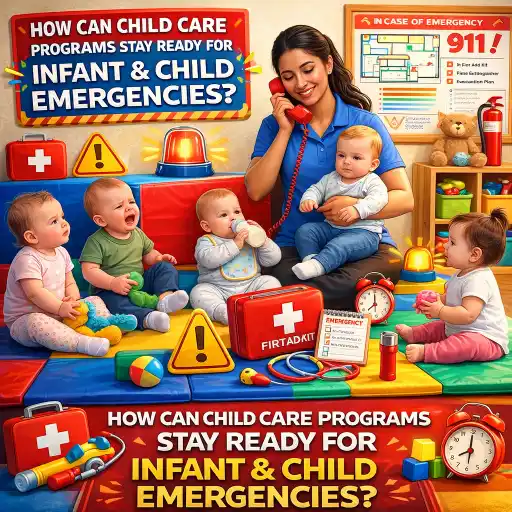
Why it matters:
1. Kids move fast and get into things. Quick help can stop small problems from getting worse.
2. Families trust us. Good emergency plans build trust and calm. See why first aid and planning are critical in early childhood settings at Stay Ready: First Aid and Emergency Procedures.
3. Laws and licenses expect it. Having plans and trained staff helps you meet rules. For details on planning and drills see Emergency Preparedness in Childcare and the CDC guidance for providers at CDC Children & School Preparedness.
Short list of why it matters:
1. Saves lives and lowers injury severity.
2. Reduces fear for children, families, and staff.
3. Keeps your program open and in good standing.
Use simple rules: plan, train, practice. Keep a clear #safety message for families and staff. Put important forms like the emergency contact form where staff can find them quickly: see ChildCareEd forms Child Care Emergency Form Buy Now $0.00.
What should be in our emergency plan?
Make a plan that everyone can follow. A good plan is short, clear, and practiced. Use these parts:
- Documentation and contacts
- 📝 Keep an up-to-date emergency form for every child. See the example form at Emergency Form. Admin. All Ages Buy Now $0.00.
- Roles and responsibilities
- 👩⚕️ Who calls 911, who gives first aid, who watches other children?
- Evacuation and shelter plans
- 🧯 Make maps and meeting spots. Include routes for staff and for children with mobility needs.
- Medical care steps
- Include steps for CPR, choking, allergic reaction, seizure, and safe sleep. Use ChildCareEd guides like What to Do If a Baby Is Choking and CPR articles at CPR for Infants and Children.
- Communication plan
- 📱 How will you tell families and staff? Have backup methods (phone, text, paper).
Checklist tip:
- Keep an emergency kit with first aid supplies and a copy of each child’s form.
- Post emergency numbers and your plan where staff can see them.
- Review the plan with every new staff member.
Note: state requirements vary - check your state licensing agency for specific items to include.
How do we train and practice emergency response?
Training makes action fast and calm. Practice builds memory so staff don’t panic.
Steps to train and practice:
- Take formal courses
- 👩🏫 Ensure staff have infant and child #CPR and first aid. ChildCareEd offers in-person and blended courses: In-Person First Aid & CPR Buy Now $95.00 and Blended First Aid & CPR Buy Now
$85.00$80.00. Red Cross courses are also helpful: Red Cross First Aid/CPR.
- 👩🏫 Ensure staff have infant and child #CPR and first aid. ChildCareEd offers in-person and blended courses: In-Person First Aid & CPR Buy Now $95.00 and Blended First Aid & CPR Buy Now
- Do regular drills
- 🧭 Practice fire, evacuation, shelter-in-place, and lockdown drills. Keep notes: date, who practiced, time it took, problems found. The SRP (Standard Response Protocol) helps standardize actions: SRP.
- Run tabletop exercises
- 📋 Talk through scenarios with staff. Ask: who does what first? What if a child needs medication? How do we reunify with families?
- Teach children age-appropriate steps
- 🙂 Use calm language and practice simple actions so they know what to do.
Common mistakes and how to avoid them:
- Relying on memory only — fix: keep written, easy-to-read steps posted.
- Skipping drills — fix: schedule regular drills and document them.
- Not updating contacts — fix: update family and emergency contacts every 3 months.
Training and drills help staff act with confidence. Make training part of orientation and yearly refreshers.
How do we respond to common emergencies like choking, CPR needs, and allergic reactions?
1) Choking (infants and children):
- If the child can cough or cry, stay with them and watch closely.
- If the infant cannot breathe, give 5 back blows and 5 chest thrusts. For older children, use abdominal thrusts (Heimlich) if trained. ChildCareEd explains infant choking steps at What to Do If a Baby Is Choking.
2) CPR and unresponsiveness:
- If a child is unresponsive and not breathing, call 911 and start CPR right away. Follow training steps for compression depth and rate. Read the special CPR notes at CPR for Infants and Children and take a certified course.
3) Allergic reactions and anaphylaxis:
- Recognize early signs: hives, swelling, trouble breathing.
- If the child has an epinephrine auto-injector and your plan allows, administer it immediately and call 911. Follow your written allergy plan. See allergy plan guidance at Allergy Management Plans.
4) SIDS and safe sleep for infants:
Always follow safe sleep rules. For staff training on SIDS prevention, see Help Me Sleep Safety: SIDS/SUID Prevention Buy Now $35.00.
5) After the emergency:
- 📝 Document what happened. Use the child’s emergency form and write clear facts.
- 📞 Call the family and emergency contacts.
- 🩺 Ask families to seek medical follow-up, even if the child seems okay.
Always follow your program policy and your training. If you are unsure, call emergency services. Practice these steps so staff can act calmly. Teach staff to say: "I will help and I will get help now." Keep emergency supplies and #FirstAid tools ready, and train everyone in #CPR to help protect each #infant and #child in your care.
Conclusion
Emergency readiness is a team job. Do these things now:
- ✅ Make a short, clear plan and post it.
- ✅ Train all staff in infant and child #CPR and first aid.
- ✅ Practice drills and update contact forms often.
- ✅ Keep families informed and involved.
For tools and training, start with ChildCareEd resources: planning guides and courses at ChildCareEd. Also check the CDC, Red Cross, and FEMA resources linked earlier. Stay calm, practice often, and put children’s #safety first.
FAQ (short):
- Q: Who should be trained? A: All staff and substitutes who care for children.
- Q: How often to retrain? A: At least yearly, or as your state requires.
- Q: Should parents be told after a drill? A: Yes. Share simple notes and what you practiced.
- Q: Where to get forms? A: ChildCareEd has printable emergency forms: Child Care Emergency Form Buy Now $0.00.
Remember: practice builds calm. Protect children by planning, training, and acting fast.
