Introduction
Water play is fun for kids. It helps them learn and cool off. But water can be dangerous. As a #childcare provider, you must plan so play is safe. This guide gives clear steps for preventing #drowning and what to do in an emergency on water play days.
Why it matters:
1) Drowning happens quickly and quietly. Young children are at the highest risk. 2) Good planning, strong supervision, and trained staff save lives. For more program ideas see Preventing Accidental Drowning & Responsibilities in Child Care Buy Now $0.00.
State note: state requirements vary - check your state licensing agency.
How do we prevent drowning during water play?
Prevention is layers of protection. Use these steps every time you plan water play:
- Designate a trained water watcher: 1 adult is always assigned to watch the water. No phones, no reading. This is active #supervision (see Six strategies for active supervision Buy Now $0.00).
- Use barriers and safe zones: fence pools and lock gates. Keep inflatable kiddie pools empty when not in use. The CDC and ChildCareEd recommend four-sided fences and removing toys after use (CDC Drowning Prevention, Water Safety for Toddlers).
- Choose safe equipment: use U.S. Coast Guard-approved life jackets for boating or for weak swimmers. Don’t use air-filled toys as safety devices (Red Cross).
- Follow rules for small pools: CDC says small inflatable pools can spread germs and should be emptied daily and cleaned; do not use them for large groups in care settings (CDC kiddie pool guidance).
Quick checklist:
- 🔒 Gate locked?
- 🕵️ Water watcher assigned?
- 🛟 Life jackets ready?
- 🧴 Pool chemicals stored safely?
What emergency steps should staff take if a child is missing or goes under water?
When seconds count, follow a clear plan. Practice these steps with staff so everyone acts fast and calm.
- Look and act fast: if a child is missing, check the water first. Call for help immediately (someone should dial 911 or your local emergency number).
- Remove the child from the water: safely pull them out without putting yourself at risk. If you must enter water, use a rescue tool or throw a floatation device first (Red Cross rescue steps).
- Assess breathing: if the child is not breathing, start rescue breathing and CPR right away. The American Red Cross and CDC advise that trained staff begin CPR while someone calls 911.
- Assign roles: 1) rescuer, 2) phone/911 caller, 3) crowd control/other children, 4) prepare documentation and parent contact. This keeps help organized.
- Use AED if available: follow the device prompts. Many programs keep an AED on site for emergencies.
- Document and notify: once safe, document the incident and notify parents and your licensing body. Review the event with staff to improve plans.
Training reminder: require up-to-date CPR and First Aid. ChildCareEd courses and other trainings help staff stay prepared (First Aid & CPR training, CPR and First Aid).
What training, staffing, and equipment should our program have for safe water days?
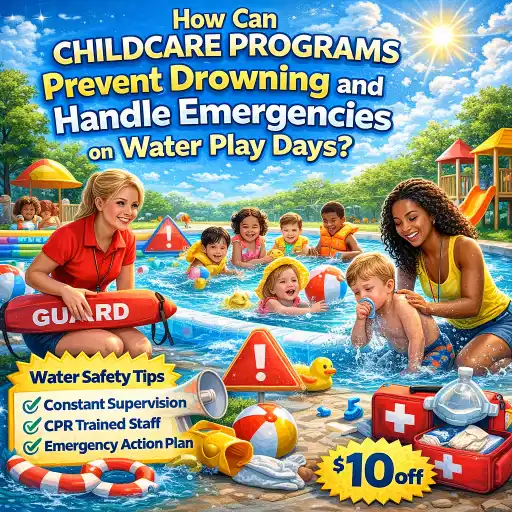
Staff, training, and gear are the backbone of safe water play. Plan and document this before the season starts.
- Staffing levels and roles:
- 👀 Water watcher always within arm's reach for infants and toddlers.
- ➡️ Extra trained adults for mixed-age groups; use the active supervision strategies from ChildCareEd (active supervision Buy Now $0.00).
- Training:
- 📘 All staff must have current pediatric CPR and First Aid. Offer regular refreshers and practice drills (Injury Prevention
 Buy Now $24.00).
 - 🧪 Train on pool chemical safety, hygiene for splash pads, and how to clean inflatable pools per CDC guidance (kiddie pool cleaning).
- 📘 All staff must have current pediatric CPR and First Aid. Offer regular refreshers and practice drills (Injury Prevention
- Equipment and site checks:
- 🛟 Life jackets in good sizes and condition.
- 🔑 Locked gates, self-closing latches, no climbable objects near fences.
- 🧯 AED, emergency phone, first aid kit, and clear signage.
- Policies and family communication:
- 📋 Written water-play plan and parental permission forms.
- 📢 Share rules with families and explain your supervision and emergency procedures.
State note: state requirements vary - check your state licensing agency to confirm training and staffing rules.
What common mistakes should we avoid and how do we practice and improve?
Avoiding mistakes keeps kids safer. Learn common pitfalls and steps to fix them.
- Over-reliance on swim lessons: Swim lessons help, but they do not replace supervision. Research and experts warn that lessons can make caregivers feel too relaxed. See discussion in Swim lessons won’t keep your toddler from drowning.
- Distracted supervision: Phones, conversations, or food breaks lead to missed moments. Make a rule: water watcher off phones. Use checklists for shift changes so someone is always watching.
- Using kiddie pools incorrectly: CDC says small inflatable pools can spread germs and are unsafe for groups. Empty and clean them daily or avoid them in group care (CDC guidance).
- Poor policy practice: Not rehearsing emergencies or not documenting lapses makes mistakes repeat. Hold short drills and review each water day.
How to improve:
- 🔁 Run quick drills before each water season and after staff changes.
- ✅ Use a safety checklist each time (see Playground and Water Safety Guidelines Buy Now $0.00).
- 📈 Track near-misses and fix problems right away to build a culture of #safety (see 10 Actions to Create a Culture of Safety Buy Now $0.00).
Conclusion
Water play can be joyful and safe when you plan, train, and watch closely. Use layers of protection: clear policies, trained staff, the right equipment, and strong #supervision. Keep CPR and First Aid current and run regular drills. ChildCareEd has courses and resources to help programs meet training needs (1,2,3 Eyes on Me Buy Now $32.00$24.00, Injury Prevention Buy Now $24.00).
Remember: 1) designate a water watcher, 2) follow your written plan, 3) practice emergency steps, and 4) tell families your rules. Keep learning and improving — our kids depend on it. #waterplay #CPR #drowning #safety #supervision
FAQ
- Q: Should we allow small inflatable pools at child care? A: Generally avoid for groups. If used, empty and clean daily and follow CDC steps (CDC).
- Q: How close should staff be to toddlers in water? A: Within arm's reach and ready to touch; use touch supervision for infants and toddlers.
- Q: Do swim lessons remove the need for supervision? A: No. Lessons help skills but never replace active adult supervision (ChildCareEd).
- Q: What if our state requires extra training? A: state requirements vary - check your state licensing agency and document staff training.
- Q: Where can I get more resources? A: ChildCareEd resources and the CDC and Red Cross pages linked above are good places to start.
