Why make CPR training your New Year’s resolution?
As the calendar turns, many professionals prioritize targeted, competency-based resolutions that strengthen workplace safety and caregiver readiness. If you seek a resolution that combines professional development with demonstrable public-health impact, enroll in a standardized CPR course. AidCPR provides both in-person and blended training options tailored to adult learners with competing schedules; for early childhood practitioners, ChildCareEd offers caregiver-focused pathways such as the Pediatric Blended First Aid & CPR/AED Buy Now $85.00 and the in-person Pediatric In‑Person First Aid & CPR/AED Buy Now $95.00$90.00, each emphasizing supervised skills verification and documentation suitable for many licensing or registry requirements.
Here are the top 5 reasons why enrolling in a CPR class should be on your professional to-do list.
What will you learn in a pediatric First Aid & CPR course?
Pediatric First Aid & CPR courses focus on age-specific assessment and interventions: recognition of airway and respiratory distress, high-quality chest compressions adjusted for infant and child physiology, rescue breathing, foreign-body airway obstruction relief, and safe use of an Automated External Defibrillator (AED). In addition to core resuscitation skills, caregiver-focused curricula commonly include recognition and initial management of severe allergic reactions (including epinephrine auto-injector administration), diabetic emergencies, febrile seizures, and basic wound and fracture care. You will also practice documentation and reporting, strategies for rehearsed emergency communication with 911/EMS, and family notification procedures that programs expect providers to follow.
This content is deliberately practice-oriented: hands-on skills sessions let you demonstrate compressions, ventilations, and choking-relief on manikins under instructor observation. For caregivers seeking a blended format that pairs self-paced study with a skills-check session, consider ChildCareEd's blended offering for caregivers (Pediatric Blended First Aid & CPR/AED Buy Now $85.00) or the all-ages blended CPR course (CPR & AED Adult, Child, Infant - Blended Buy Now $85.00), both designed to align practical performance with regulatory expectations in many licensing systems.
If you prefer in-person instruction to maximize supervised practice, the Pediatric In-Person First Aid & CPR course (Pediatric In‑Person First Aid & CPR/AED Buy Now $95.00$90.00) provides an extended skills session and more time for scenario-based drills. For clinical staff or those requiring healthcare-provider credentials, BLS courses are available as well (BLS for Healthcare Providers Buy Now $95.00).
Further reading on training formats and remote/RSV skills verification can help you decide which model matches your learning needs: see The Benefits of CPR Remote Skills Training and practical guidance for daycare providers at Why Pediatric First Aid Training is Crucial for Daycare Providers.
How do I choose a course that satisfies licensing, employer, and professional needs?
Choosing a course requires verifying acceptance by the relevant licensing authority, your employer, or registry. Review your state or local child care licensing guidance for required topics, approved providers, and whether blended or remote-skills-verification formats are acceptable for your role. Keep in mind that acceptance can differ by role (director vs. classroom staff), program type (family home vs. center), and age groups served. Always retain the course completion certificate and any skills-verification documentation for your personnel file and registry upload.
Evaluate courses by these practical criteria: clearly stated learning objectives and competencies; a hands-on skills component with instructor verification; a 2-year certification or CEU information; and transparent statements about which topics (pediatric vs. adult) are covered. ChildCareEd courses typically note state approvals and licensing agency coverage; if you need assistance confirming whether a particular course meets your licensing requirement, contact your licensing specialist and the course provider prior to registration.
To help you prepare, ChildCareEd offers related articles and guides on why providers should complete first aid/CPR training (Why Should Child Care Providers Get CPR and First Aid Training?), planning for the school year (Getting Ready for the New School Year), and an empowerment piece for caregivers (First Aid & CPR — Empowerment Through Lifesaving Skills). For program leaders who want to encourage staff uptake, see Superheroes Wear Capes...And Take First Aid & CPR Classes and the training-focused piece Pediatric First Aid and CPR Training with ChildCareEd.
1. Could you save a life if you learned CPR?
Each year, thousands of lives are lost because immediate #CPR wasn’t administered during a cardiac #emergency. Statistics show that survival rates can double or even triple when bystanders perform CPR. (UMMC: AED placement and training)
Whether it’s a family member, friend, or stranger in need, your knowledge of #CPR could make the difference between life and death. The power to save a life is in your hands—learn how to use it.
2. Which training formats fit different schedules and needs?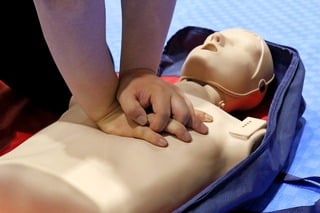
We know your time is valuable, which is why AidCPR offers flexible training options to suit your lifestyle. Blended formats that combine online coursework with a short hands-on skills session are widely used for workplace and volunteer training (Adult Learning Experience example).
- In-person classes at our Gaithersburg, MD location or other convenient settings.
- Blended learning courses, combining online learning with hands-on practice for ultimate flexibility.
Our courses are designed to fit into your schedule, whether you’re a busy professional, parent, or student.
3. Who benefits from CPR skills in childcare and community settings?
CPR isn’t just for healthcare providers—it’s for everyone. Whether you’re a daycare provider, teacher, healthcare professional, or simply a concerned community member, knowing CPR means you’re prepared for emergencies anywhere.
By learning CPR, you’re building confidence and creating a safer environment for those around you.
4. How much time does certification take and what competencies will you gain?
Many CPR certifications can be completed in just a few hours. In that short time, you’ll gain skills that could benefit your community for years to come.
With AidCPR’s hands-on training, you’ll practice essential techniques like chest compressions, using an automated external defibrillator (AED), and providing rescue breaths. The knowledge you’ll gain is invaluable.
How can your CPR training influence colleagues and families?
When you commit to learning CPR, you inspire others to take action. The ripple effect—friends, family, and coworkers enrolling in training—multiplies community readiness and increases the probability that a trained responder will be present when needed.
Summary: How can you make a year of impact through CPR training?
Resolve to strengthen your competency in lifesaving interventions by enrolling in an accredited CPR course. AidCPR and ChildCareEd provide accessible formats, instructor-led skills verification, and completion documentation to support institutional compliance and personal preparedness. Increasing the number of trained responders across programs contributes to community resilience in emergent cardiac and respiratory events.
