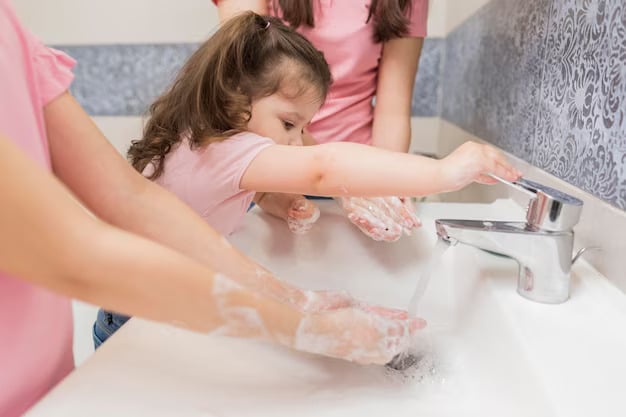
 If you work in #early-childhood care — whether a #home-based #daycare, #preschool, or center — you already know how important cleanliness is. But believe it or not, there are some sneaky little mistakes even experienced providers fall into when it comes to handwashing and sanitizing. Read on to catch the most common slip-ups — and learn how to keep your environment as #safe and #healthy as can be.
🚿 Mistake #1: Skipping Soap & Water for Quick “Sanitizer Moments”
It’s tempting when time is tight: wipe a child’s hands with sanitizer or a wet wipe, and move on. But that’s one of the biggest missteps. While alcohol-based hand sanitizers (with at least 60% alcohol) are helpful in a pinch — for example during field trips or when soap and water aren’t available — they should never replace proper handwashing when hands are visibly dirty, after diaper changes, after bathroom use, or after messy #play.
Handwashing with warm running water and liquid soap, scrubbing for at least 20 seconds (sing “Happy Birthday” twice!) remains the gold standard.
✅ How to Do It Right
-
Use liquid soap (bar soap can collect and pass on germs).
-
Use warm running water — but keep it safe for little hands (no scalding!).
-
Scrub thoroughly: backs of hands, between fingers, under nails. Make it a routine.
-
Rinse well and dry completely — wet hands spread germs more easily.
-
Use a paper towel or disposable towel to turn off the faucet — don’t let hands touch the dirty handle again.
🧸 Mistake #2: Forgetting Infants and Toddlers in the Handwashing Plan
When providers are busy, it’s easy to focus on #preschoolers and older children — #toddlers and infants might get overlooked. But little ones also pick up germs fast. Skipping handwashing for them, especially after diapering, feeding, or messy play, increases their risk of illness. Many providers accidentally skip washing infant hands altogether because sinks are at adult height.
It’s important to wash everyone’s hands — #staff, preschoolers, toddlers, and infants. If needed, use a step stool or a portable handwashing station. Encourage independence gradually, but always supervise when children are young.
🧼 Mistake #3: Overusing Disinfectants — or Using Them Incorrectly
Sanitizing and disinfecting surfaces and toys is vital — but some providers overdo it, disinfecting everything all day long even when not needed. Another issue is not cleaning before sanitizing. Dirt and grime can block disinfectants from working properly. Proper process: clean first (soap + water), then sanitize/disinfect when needed.
Also, overuse of harsh chemicals can be harmful to both children and staff. So use sanitizers and disinfectants judiciously — prioritizing high-touch surfaces (doorknobs, toy handles, diaper-changing tables, eating areas).
📅 Mistake #4: Not Having a Routine or Checklist for Cleanliness
In a busy preschool or daycare, it’s easy to miss cleaning moments — especially during transitions, snack time, art, and play. Without a routine or clear plan, handwashing and sanitizing can become inconsistent.
This is where resources like the ChildCareEd course Everyday Safety: Creating Healthy Environments  Buy Now $55.00 can help. That course shows how to build predictable routines, hygiene policies, and illness-prevention plans for child care settings. Child Care Education Buy Now $55.00
Also useful: the Creating Safe & Healthy Child Care Environments Buy Now $55.00 course, with strategies for hazard management, illness prevention, and environmental #safety.
A helpful tool: the **Monthly Classroom Maintenance Checklis Buy Now $0.00t from ChildCareEd — it helps you schedule routine cleaning tasks so nothing #falls through the cracks.
🤧 Mistake #5: Treating Hygiene as a “When-We-Have-Time” Task
Because children are constantly active — eating, playing, exploring — hygiene must be part of everyday flow, not just an occasional extra chore. Waiting until snack time or cleanup to think about handwashing is risky. Instead: build hygiene “micro-moments” into daily routines.
For example, after playtime, before snacks, after diaper changes, before arts & #crafts, after #outdoor-play — each is a cue for handwashing or sanitizing. Making these cues predictable helps children adopt good habits. That’s exactly what the Everyday Safety course helps you design.
🧑🏫 Bringing It All Together: Create a Culture of Clean
If you want to elevate hygiene in your child care program, here’s a simple action plan:
-
Use proper handwashing — always soap, water, 20 seconds, clean drying.
-
Include everyone — infants, toddlers, preschoolers, and staff.
-
Clean before sanitizing, and disinfect only when needed.
-
Integrate hygiene into daily routines — don’t wait for “clean up time.”
-
Use a checklist or schedule (like the Monthly Classroom Maintenance Checklist) to stay consistent.
-
Consider a training course — both Everyday Safety and Creating Safe & Healthy Child Care Environments give actionable strategies.
When you follow these steps, you’re not just preventing germs — you’re creating a space where kids feel safe, families feel confident, and health becomes a habit for everyone. A clean, organized, predictable environment sets the foundation for learning, #growth, and fun.
📲 Connect With ChildCareEd
Follow ChildCareEd on social media for updates, tips, and more:
👉 Instagram: https://www.instagram.com/childcareed/
