Your First CPR Class? Here's What You Can Expect (And Why You'll Be Glad You Came)
Pursuing CPR certification can initially feel intimidating, yet the process is fundamentally empowering. Whether training is required for employment, intended to strengthen emergency preparedness, or motivated by an interest in lifesaving practice, an introductory CPR course develops the conceptual knowledge, procedural fluency, and psychomotor skills necessary for decisive action during a critical event.
Let’s break down what your first CPR certification class with AIDCPR will actually be like—no mystery, no surprises.
What Will the Course Cover and How Will You Practice?
Your first CPR class will typically include the basics of:
-
Performing chest compressions and rescue breaths
-
Using an AED (Automated External Defibrillator)
-
Recognizing cardiac arrest and taking action
-
Caring for adults, children, and infants (depending on the course)
You can choose from a few different class types depending on your needs:
-
BLS (Basic Life Support) for Healthcare Providers Buy Now $95.00
If you work in healthcare and want more detail on why clinicians commonly choose AidCPR for BLS, read why healthcare professionals should choose AidCPR for BLS certification to learn about compliance, scheduling flexibility, and clinical relevance.
If you’re unsure which one is right for you, check out this guide to online vs. in-person CPR training to help you decide.
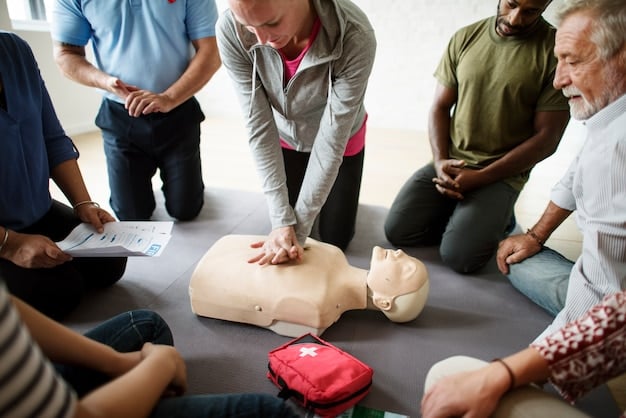
After the instructor introduces the emergency-response sequence, you will usually work through a structured practice cycle. You observe a demonstration, rehearse the skill on a manikin, receive coaching, and repeat the sequence until your technique is consistent. Practice may include assessing responsiveness, activating emergency services, checking breathing, delivering high-quality compressions, giving rescue breaths when the course requires them, and integrating AED prompts into the response.
Expect an applied learning experience rather than lecture-only instruction. You may kneel beside a manikin, rotate roles with a partner, and rehearse coordination between chest compressions and ventilations. Instructors can also discuss how adult, child, and infant responses differ. Tell the instructor before class if a physical limitation affects kneeling, compressions, or floor transfers so an appropriate accommodation or alternative can be discussed.
In a blended course, the online portion introduces concepts and may include knowledge checks; the in-person session is where you practice and demonstrate skills. A verified description of this format is available from Rowan University’s CPR course information.
How Does the Course Format Affect Practice?
Not necessarily. AIDCPR offers a Blended Training option for learners who need scheduling flexibility or prefer self-paced preparation. You’ll complete the coursework online and then attend an in-person skills session to demonstrate CPR techniques under instructor supervision.
This option is flexible, fast, and effective. Explore blended CPR & First Aid courses here Buy Now $85.00$80.00.
How Can You Prepare for Class?
All materials will be provided during class—including training manikins, AED trainers, and printed guides. Just bring:
-
Comfortable clothes (you’ll be moving around)
-
A notebook if you like taking notes
-
An open mind and readiness to learn!
For those who like to be prepared for everything, AIDCPR recommends having a solid Emergency Supply List Buy Now $0.00 at home or in your car. Child-care professionals can also review why first aid and CPR matter for teachers and parents when adapting emergency preparation to settings with children.
Will It Be Difficult?
For most beginners, the course is demanding but manageable rather than inaccessible. Instructors provide structured guidance, opportunities for clarification, and repeated practice so you can refine technique before the skills assessment.
Plus, the environment is usually relaxed and even fun—there’s often laughter, teamwork, and high-fives by the end.
Before registering, confirm which population and credential your employer, school, licensing agency, or professional organization requires. A general CPR course, a pediatric course, and BLS for healthcare providers may differ in scope, assessment, and intended audience. Completing a course does not by itself create a professional license or guarantee that every employer or agency will accept the certificate, so verify the requirement before enrolling.
Review the course description, delivery format, skills-session requirements, identification or attendance rules, and assessment process. Wear clothing that permits comfortable movement, arrive prepared to participate actively, and disclose relevant physical limitations privately to the instructor. If you are taking training for a child-care role, ask whether infant and child skills are included rather than assuming an adult-focused class covers them.
It can also help to write down questions in advance: Which emergencies does the course address? How are skills evaluated? When and how is the certificate issued? What should you do if you miss the skills session? These questions make the registration decision more deliberate and help prevent confusion on class day.
Can I Take the Course With Friends or Coworkers?
Absolutely. In fact, AIDCPR offers group discounts—so whether you’re signing up with family, coworkers, or your volunteer crew, you’ll save while learning lifesaving skills together. If you’re planning to see family during the holidays, consider giving the gift of life this holiday by gifting a CPR class to loved ones.
What Happens During and After Certification?
Once you complete the course and pass the skills assessment, you’ll receive a certification card that’s valid for two years. You’ll be officially CPR certified—and ready to save a life if the moment ever comes. If your work involves children, review life-saving skills for childcare providers and teachers as a next step in connecting certification with daily safety practice.
Choose based on the skills you need to demonstrate, not merely on the course label. Adult-focused CPR/AED training may be appropriate for some workplace settings; child-care professionals may need pediatric coverage; and healthcare personnel may need a BLS course aligned with their role. If an employer or licensing body specifies a provider, format, or renewal interval, treat that requirement as the deciding criterion and confirm it before payment.
Compare whether the course includes first aid, AED use, infant and child practice, an in-person skills assessment, and a certificate. Self-paced online instruction may be convenient, but it is not interchangeable with a course requiring hands-on demonstration. When the format or acceptance status is unclear, contact the course provider and the organization requesting the credential.
For additional context, compare the discussion of pediatric first aid and CPR training with this article’s overview. Readers considering remote skills practice can also review the benefits of CPR remote skills training.
Where Can I Learn More or Sign Up?
Head over to the course catalog at:
What Should You Remember Before Your First CPR Class?
Taking a CPR class is a practical investment in emergency readiness. Expect an applied learning experience that combines instruction, hands-on manikin practice, formative feedback, and a skills assessment rather than lecture-only learning. Before registering, confirm that the course covers the population and credential your employer, school, licensing agency, or professional organization requires. Arrive prepared to participate, disclose physical limitations privately to the instructor, and ask how skills are evaluated and how certification is issued. The central takeaway is that training develops emergency readiness; maintaining that readiness requires ongoing practice and confirming the requirements established by the relevant employer or agency.
Don’t forget to follow AIDCPR on social media to stay updated on safety tips, special promotions, group training opportunities, and more. #CPR #FirstAid #AED #Safety #Preparedness
