How can you tell if a baby is really choking?
In child care, babies gag and cough sometimes—especially during meals. That can look scary, but it is not always choking.
A baby may be choking if you see these signs:
- No sound (can’t cry or cough)
- Trouble breathing or no breathing
- Skin turning blue or gray (especially lips or face)
- Weak or no cough
- Panic look or wide eyes
A baby may be gagging (not choking) if:
- They are coughing loudly
- They are making sounds
- They are breathing between coughs
If the baby is coughing well, stay close and watch, but do not do back blows. Strong coughing can push the object out on its own.
#Montessori is not the focus here—but respect and calm still #matter. Your calm voice helps everyone.
What should you do first if a baby is choking at child care?
Start with these quick steps:
- Stay calm and act fast.
- Check if the baby can cough or cry.
- Call for help right away (use your #classroom #emergency #plan).
If the baby cannot cough, cry, or breathe, treat it as a true emergency.
In the #center, a good team plan is:
- One adult starts choking help
- Another adult calls 911 and alerts the director
- Another adult supervises the rest of the children
Even if you are alone, you still start care right away, and call 911 as soon as you can #safely do it.
How do you help a choking baby who is still awake?
Training #matters most here. The steps below match common infant choking guidance: back blows and chest thrusts.
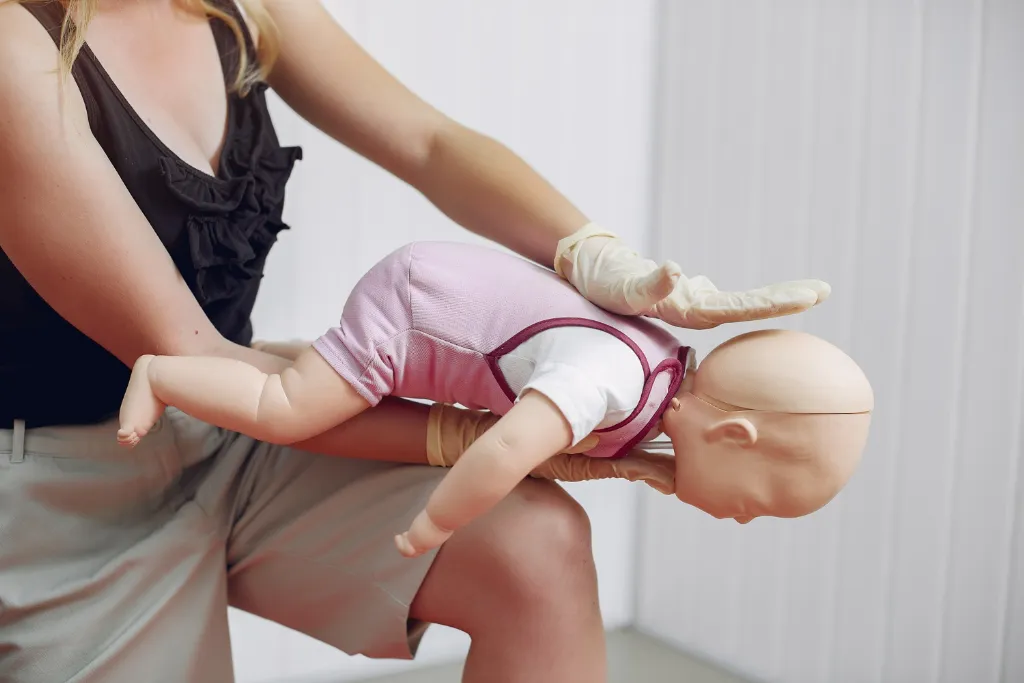
If the baby (under 1 year) is choking and awake:
- Give 5 back blows
- Support the baby’s head and neck
- Place the baby face-down along your forearm or thigh
- Use the heel of your hand between the shoulder blades
- Then give 5 chest thrusts
- Turn the baby face-up
- Use two fingers in the center of the chest (below the nipple line)
- Push straight down with quick thrusts
- Repeat 5 and 5
- Keep going until the object comes out or the baby becomes unresponsive
Important “don’ts”:
- Don’t do the Heimlich/abdominal thrusts on an infant. Infant choking relief uses back blows and chest thrusts.
- Don’t do a blind finger sweep. Only remove an object if you can clearly see it in the mouth.
What if the baby becomes unresponsive or stops breathing?
If the baby becomes unresponsive (limp, not responding), this is now a life-threatening emergency.
- Call 911 immediately (or have someone else call).
- Start infant CPR right away and follow your training steps.
If you need BLS certification or a convenient blended course to refresh hands-on infant CPR skills, AidCPR's blended BLS course lets child care providers complete online learning plus a practical skills check to get certified quickly.
During CPR, you may look in the mouth only if you see an object you can remove safely. Then continue CPR until help arrives.
If your program has an AED and your training includes how to use it with children, follow your course guidance and center policy.
What should you do after the choking emergency is over?
Even when a baby seems “fine,” your work is not done yet. The baby may still need medical checks.
After the emergency:
- Get medical care if required by 911/EMS, family, or policy
- Notify the director right away
- Call the family as soon as it is safe to do so
- Complete an incident report with clear facts:
- What the baby was doing (eating, #playing, sleeping)
- What item caused the choking (food/toy)
- What steps did you take (back blows, chest thrusts, CPR)
- Who called 911 and when
- What happened next (object removed, EMS arrived)
ChildCareEd also shares why choking training is so important for providers here 
How can you lower the choking risk in child care every day?
Prevention saves lives. Many choking events happen during meals or when small items are within reach.
Food #safety habits:
- Seat babies and #toddlers-for meals (no walking with food)
- Offer age-safe foods and textures
- Cut high-risk foods (like grapes and hot dogs) the safe way for the child’s age
- Watch closely during meals—no distractions
Toy and room safety habits:
- Keep small objects out of infant areas
- Check the floor often (especially after older kids play)
- Use the “small parts” test tool if your program has one
- Follow manufacturer's age labels on toys
Team habits:
- Practice emergency roles (who calls 911, who helps, who watches the group)
- Keep emergency numbers easy to grab
- Review choking steps during #staff meetings
A helpful #free tool to support emergency readiness is this AidCPR printable: Emergency Supply List - Childcare Resource Buy Now $0.00
Which AidCPR courses can help you feel ready for choking emergencies?
The best way to respond correctly under #stress is to train and practice. These AidCPR courses connect directly to choking response, CPR, and emergency care:
- Pediatric Blended First Aid & CPR/AED Adult, Child, Infant Buy Now
$85.00$80.00 - CPR & AED Adult, Child, Infant – Blended Buy Now $85.00
- Pediatric RSV First Aid & CPR/AED (includes choking protocols) Buy Now $115.00
These trainings can help you build #speed, confidence, and the right habits—so you don’t #freeze during an emergency.
Where can you get more child care safety tips and reminders?
For quick safety updates, training reminders, and helpful links, follow ChildCareEd here:
https://linktr.ee/childcareed
Follow today and share the page with your team—because being prepared protects children.
Friendly reminder: This article is for general education. Your program should always follow local rules, licensing requirements, and your official CPR/First Aid training—especially for hands-on skills in emergencies.
