What does “unresponsive” mean, and why does it matter?
“Unresponsive” means the baby does not react when you talk, touch, or gently tap. The baby may look limp, very still, or “not like themselves.” If an infant is unresponsive and not breathing (or only gasping), CPR is needed right away.
What should you do first if an infant is unresponsive in a crib? 
Use this simple action plan. Many programs teach something like “check, call, care.”
- Stay calm and move quickly.
- Check for responsiveness: say the baby’s name and gently tap the bottom of the foot.
- Check breathing: look for chest movement and listen for breath sounds.
- Call for help right away: shout for another #staff member (if anyone is nearby).
- Get #emergency help: have someone call 911 and bring the AED and first aid kit.
- Move the baby to a firm, flat surface for CPR (crib mattresses are not firm enough for effective compressions).
- Start CPR if the baby is not breathing or only gasping.
This is not the time to “wait and see.” Seconds matter in a breathing or heart emergency.
How do you move the infant #safely from the crib?
You do not need a perfect lift. You need a safe, fast move.
- Lower the crib rail (if possible).
- Support the head and neck as you lift.
- Place the baby on the floor (or another firm, flat surface nearby).
- If you think there may be an injury (like a fall), move carefully—but do not delay lifesaving care when there is no breathing.
Should you call 911 first or start CPR first?
It depends on whether you are alone.
If you are NOT alone:
- One person calls 911 right away.
- The other person starts CPR right away.
- A third person (if available) brings the AED and helps guide EMS to your room/door.
If you ARE alone:
- If you have a phone with you, call 911 and start CPR.
- If you do not have a phone with you, do about 2 minutes (5 cycles) of CPR, then call 911 and return to CPR as fast as possible.
What does CPR look like for an infant in child care?
Always follow what you learned in your approved course and your program policy. In general, infant CPR includes:
- Chest compressions in the center of the chest
- Rescue breaths (if trained)
- Continuing cycles until help arrives or the infant starts breathing normally
If an AED is available, use it as soon as possible and follow the device voice prompts. (AEDs are made to guide you step-by-step.)
What if you suspect choking instead of “ #sleep-related” unresponsiveness?
Sometimes an infant is unresponsive because of choking, reflux, or another airway problem. If you see an object in the mouth, remove it only if it is easy to grab. Do not do a blind finger sweep (putting fingers in without seeing the object), because it can push an object deeper.
If the infant becomes unresponsive during choking, training often teaches you to begin CPR and check the mouth before breaths. Follow your course steps.
What should you do after 911 is called and CPR is started?
Once emergency care is in progress, other staff (if available) should support the scene.
- Send someone to meet EMS at the entrance.
- Bring the child’s emergency info (contacts, medical notes, allergy plan).
- Clear the area so CPR can continue safely.
- Time matters: note the time you found the baby and when CPR started (if possible).
- Notify administrators per your center policy.
How do you communicate with the family and document what happened?
Families deserve clear, simple facts.
After EMS takes over (or the situation is stable), complete an incident report with:
- What you observed (example: “unresponsive,” “not breathing,” “gasping”)
- The steps you took (called 911, CPR started, AED used)
- Who was involved (staff names/roles)
- Times (as best as you can)
- Who you notified and when
Keep your tone calm and caring. Avoid guessing the cause. Your role is to report what happened and what was done.
How can child care programs reduce the risk during sleep times?
Not every emergency can be prevented, but strong sleep practices reduce risk and help you notice problems faster.
Use #safe-sleep basics (ABCs):
- Alone (no pillows, blankets, stuffed toys)
- Back (place infants on their backs for sleep)
- Crib (firm, flat surface with a fitted sheet)
Build “sleep-time #safety habits” like: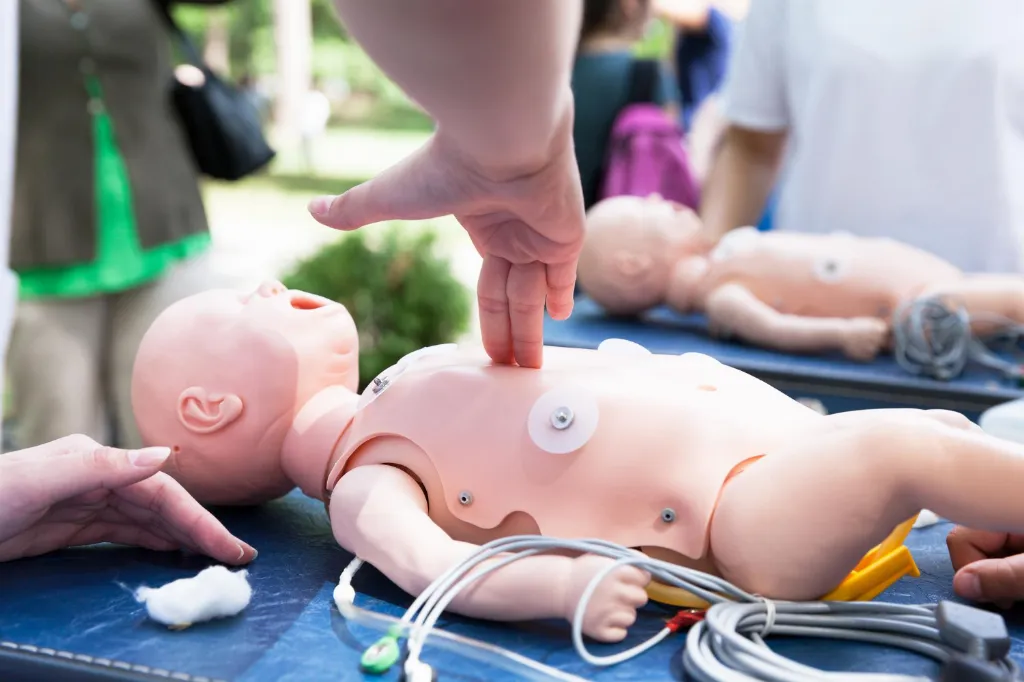
- Frequent, documented checks (follow your licensing rules)
- Clear staff roles during #nap-time
- Safe sleep training for every staff member
- A plan for what to do if a baby is hard to wake or looks “off”
Which AID CPR training and ChildCareEd links can help you feel ready?
If you want to be prepared for real moments (not just tests), choose training that includes infants and hands-on practice:
- Pediatric Blended First Aid & CPR/AED Adult, Child, Infant Buy Now
$85.00$80.00 - CPR & AED Adult, Child, Infant – Blended Buy Now $85.00
- CPR & AED Adult, Child, Infant – In Person Buy Now $90.00
Free ChildCareEd resource (helpful for emergency planning):
Related ChildCareEd article to support sleep safety:
Where can you get more quick safety tips and support?
