It was just another Tuesday night.
Imagine Tony, a seasoned security guard at a local corporate office, was doing his routine rounds. Coffee in hand, earpiece in, he wasn’t expecting anything out of the ordinary. That’s when it happened.
A colleague in the lobby clutched his chest and collapsed. Chaos erupted. People screamed. Phones came out. But no one knew what to do—except Tony. Thanks to his recent Adult First Aid & CPR/AED (Blended) Buy Now $70.00 and Adult Only CPR & AED Buy Now $70.00 training, Tony sprang into action. He checked for breathing. No pulse. He grabbed the AED, followed the prompts, and started compressions.
By the time paramedics arrived, Tony had done more than secure a building—he’d saved a life.
Prioritize #CPR, #AED, #FirstAid, #safety, and #preparedness in your training communications.
Why should every security professional have First Aid & CPR training?
Security is not limited to surveillance cameras and access badges; it encompasses anticipatory readiness for a broad spectrum of incidents—ready to respond to anything, including medical emergencies that require prompt clinical intervention.
Whether you serve at an educational campus, a health-care facility, a retail complex, or a corporate headquarters, security personnel are frequently the initial responders to medical events. If you regularly work around children — at daycares, school campuses, or summer camps — consider pediatric-focused First Aid and CPR training such as Do You Know How to Save a Life at Your Daycare or Summer Camp?. That positional advantage imposes a responsibility: rapid, technically proficient intervention can materially alter outcome trajectories for cardiac arrest, airway compromise, or catastrophic hemorrhage. In facilities where security staff work alongside clinical teams, Basic Life Support (BLS) certification further strengthens readiness for in-hospital cardiac emergencies; read more about BLS-focused preparedness and certification in How Prepared Are You Really to Handle a Code Blue?. If your assignment includes schools, daycares, or summer programs, consider Pediatric First Aid & CPR training to address child-specific emergencies and common pediatric scenarios.
Because of this, many organizations partner with structured training providers to standardize competencies and documentation. Training with a recognized program such as AidCPR supports a consistent approach to resuscitation and on-site medical stabilization. Many security groups elect ChildCareEd blended or on-site First Aid & CPR delivery to balance comprehensive instruction with shift coverage needs; for perspectives on workforce empowerment through lifesaving skills, see First Aid & CPR ~ Empowerment Through Lifesaving Skills.
How can you act as the first responder before emergency services arrive?
You’re already on-site. Emergency crews could be 5-10 minutes away (or more). With CPR and AED training, you can take immediate, life-saving action before they arrive. For program examples and scenario-based drills that map to facility layout, see First Aid and CPR: An Investment in Community Safety and The Benefits of CPR Remote Skills Training.
Holding CPR/AED certification signals professional competence and commitment to safety; it documents practical, validated skills rather than informal experience alone. Employers and contract managers increasingly value documented readiness when evaluating security teams, and certification is frequently cited during promotions, contract bids, and post-incident reviews.
How can certification expand your career opportunities?
Many employers require First Aid and CPR certification. Even if yours doesn’t, having it gives you a serious edge when applying for higher-level positions. Read how training supports workplace preparedness in Learn CPR and Be the Hero in a Crisis!! and how empowerment through skills benefits teams in First Aid & CPR ~ Empowerment Through Lifesaving Skills.
How does First Aid & CPR training help keep your team safe?
You’re not just protecting property—you’re protecting people. From heart attacks and choking to allergic reactions and cuts, you'll know exactly what to do. If your site serves children or youth, consider pediatric-specific training — learn how to recognize and respond to cardiac emergencies in children with Pediatric CPR and First Aid.
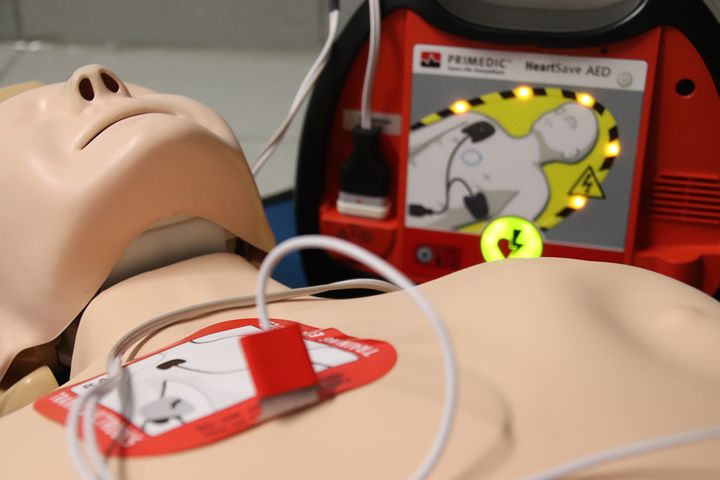
What will you learn in an Adult First Aid & CPR/AED course?
Our Adult First Aid and CPR/AED course Buy Now $85.00 teaches you how to handle:
-
Cardiac emergencies: Recognize and respond to heart attacks and cardiac arrest
-
AED use: Learn to #safely and confidently use an Automated External Defibrillator
-
Choking: Perform the Heimlich maneuver on conscious and unconscious victims
-
Bleeding and injuries: Control bleeding, treat cuts, burns, and more
-
Sudden illnesses: Recognize signs of stroke, seizures, diabetic emergencies, and allergic reactions
And it's all taught in a practical, hands-on way—no boring lectures here.
What training formats are convenient for busy security professionals?
You’ve got shifts, responsibilities, and probably not a lot of #free time. We get it. That’s why AidCPR offers flexible training options that work with your schedule:
Are in-person classes available near me?
Join us at our Gaithersburg, MD location—super convenient if you're coming from Frederick, Rockville, or Germantown. Our training center is comfortable, professional, and easily accessible with plenty of parking.
What is blended learning and how does it work?
Complete the lecture portion online at your own pace, then come in for a quick hands-on skills session. It’s perfect for night shift warriors or weekend workers.
Can training be delivered on-site at your location?
Got a team? We’ll come to you. Whether it's a corporate office, event venue, or shopping mall, our certified instructors bring everything needed to get your crew trained and certified—without the commute.
How can you maintain readiness and ensure skills stay sharp?
Certification constitutes an initial threshold; sustaining operational readiness necessitates recurrent, deliberate practice, rigorous equipment stewardship, and sustained organizational support. Schedule periodic skill refreshers and scenario-based drills that replicate common facility incidents (e.g., a collapsed patron in the lobby, a severe bleed in a loading dock). Short, frequent drills—15–30 minutes—improve psychomotor retention and team communication more effectively than infrequent, lengthy sessions.
Implement equipment protocols: routine AED battery and pad checks, visual inventories of bleeding-control kits, and clear procedures for replacing consumables. Document all checks and simplify recordkeeping with an electronic registry or checklist so audit-ready documentation is always available.
Embed training into workplace culture: include lifesaving skills in onboarding, recognize staff who complete advanced training, and ensure supervisors schedule time for refreshers. For ideas on fostering an empowered safety culture, see Superheroes Wear Capes...And Take First Aid & CPR Classes.
What are the key takeaways and next steps?
Summary: security personnel who are trained and credentialed in First Aid, CPR, and AED use materially improve on-site survival odds. Begin with a needs assessment, choose a delivery model that minimizes staffing disruption (blended or on-site), equip your team with AEDs and bleeding-control supplies, and institutionalize regular skill maintenance. To get started, enroll your staff in a blended or on-site First Aid & CPR course and designate a training coordinator to track competencies and equipment readiness.
Recommended courses: Adult First Aid & CPR/AED (Blended) Buy Now $70.00, Adult Only CPR & AED Buy Now $70.00, and Adult First Aid and CPR/AED (Combo) Buy Now $85.00. Confirm with your employer or licensing agency if a specific course format is required. For program delivery options and mobile bleeding-control curricula, see AidCPR and Stop the Bleed Training California.
- AidCPRProcess
- CPR Training: Because Glue Sticks Can’t Fix Everything!
- Be the Hero Before Backup Arrives: First Aid & CPR Training for Security Pros
- 💓Be a Lifesaver, Not a Bystander: Why Getting First Aid & CPR Certified Matters More Than Ever
- ❤️Goldfish, Glue Sticks & 911: Why CPR & First Aid Is Non-Negotiable for Childcare Providers
- Click, Learn, Save a Life! Should You Take CPR Training Online or In Person?
