When should you call 911 right away?
Call 911 first when you think the child’s life or #health could be in danger right now. The American Red Cross teaches a simple rule: Check, Call, Care—and the “Call” step happens right away for life-threatening problems.
Call 911 immediately if the child: 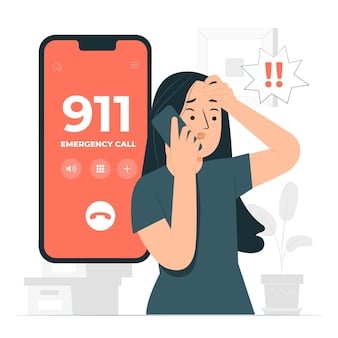
- Is unresponsive (won’t wake up or won’t respond)
- Is not breathing, only gasping, or has serious trouble breathing
- Is choking and cannot breathe or make sounds
- Has severe bleeding that will not stop with pressure
- Has skin or lips that look blue, purple, or gray
- Has a head injury with loss of consciousness, confusion, or vomiting
- Has a seizure, especially with breathing trouble or injury
- Has a serious allergic reaction (like trouble breathing, swelling of face/lips, or widespread hives), especially if an epinephrine device is used
Important: If it feels scary or “not normal,” it is better to call 911 than to wait. A pediatric hospital guide says if you are unsure, you can call 911 and let the dispatcher help you decide.
When is it okay to call #parents first?
Call the parent first when the child is stable and the situation is not an #emergency.
Often, you can call the parent first for:
- Small cuts or scrapes that stop bleeding quickly
- A minor bump with no signs of serious injury (child is alert and acting normal)
- Mild rash with no breathing problems
- Low fever (follow your program policy)
- Mild stomach ache with no signs of dehydration or severe pain
Even in these cases, keep watching the child. If symptoms change, your plan may change too.
What if you are not sure—how do you decide fast?
Use this quick decision path. You can post it in the office and review it at #staff meetings.
Step 1: “Is this life-threatening?”
Ask:
- Is the child breathing normally?
- Is the child awake and responsive?
- Is there heavy bleeding?
- Did the child have a serious fall or head injury?
- Are there signs of anaphylaxis (severe allergy)?
- Is there a seizure that seems unusual or long?
If the answer might be “yes,” call 911.
Step 2: “Do we need help right now, before a parent could arrive?”
If professional help is needed right away, call 911.
The Red Cross notes that 911 should be called for obvious life-threatening conditions (like unresponsiveness, not breathing, trouble breathing, or life-threatening bleeding).
Step 3: “If stable, call parent and follow policy.”
If the child is stable, contact the parent/guardian and follow your written procedures.
What should you do while someone calls 911?
In group care, you need a team plan. Transitions and staffing #matter.
Assign roles (practice this as a team):
- Caller: Calls 911 and stays on the phone
- Responder: Gives first aid/CPR based on training
- Group #lead: Moves the rest of the children to a #safe area and supervises
A pediatric emergency guide reminds caregivers not to hang up until the dispatcher says so. The dispatcher may give step-by-step instructions.
While waiting for EMS:
- Put the phone on speaker if possible so your hands are #free
- Keep the child safe and still (unless the environment is unsafe)
- Bring the child’s emergency forms/meds (if your policy allows)
- Send someone to meet EMS at the door and guide them to you
What should you do about seizures—parent or 911?
Seizures can look scary, but not every seizure needs 911. The key is knowing the red flags.
The CDC says call 911 if:
- The seizure lasts more than 5 minutes
- Another seizure happens soon after
- The person has trouble breathing or waking up afterward
- The person is injured
- The seizure happens in water
- It is the person’s first seizure
For a simple, printable guide, use AidCPR’s free First Aid for Seizures Info Sheet Buy Now $0.00
When should you call parents after calling 911?
In a true emergency, the order is usually:
- Call 911
- Then call the parent/guardian
Call the parent as soon as you #safely can—often while another staff member stays with the child and EMS is already on the way.
When you call the parent, keep it calm and clear:
- What happened (simple facts)
- What you did (first aid steps)
- That you called 911 (and where EMS is taking the child, if known)
- Where the #parent-should go next
Example script:
- “Hi, this is ____. Your child had an emergency. We called 911 because we saw trouble breathing. We are with your child now. EMS is on the way, and we will stay with your child.”
What should you document after the situation is stable?
Good notes protect children, families, and staff.
Write down:
- Date and time
- What you saw (facts, not guesses)
- What first aid was given
- When you called 911 and when you called the parent
- Names of staff who responded
- Any instructions from 911/EMS
- Where the child was taken (if you know)
- Who picked up the child or met EMS
Keep your tone professional and objective.
Which AidCPR courses help providers make better emergency decisions?
Strong training makes decision-making easier—because you recognize danger signs faster and know what to do next. Learn how to control life-threatening bleeding and other pediatric emergencies by taking Pediatric First Aid & CPR with AidCPR.
Here are AidCPR courses directly connected to emergency choices in child care:
- Pediatric Blended First Aid & CPR/AED Buy Now
$85.00$80.00 (Adult, Child, Infant)—covers CPR, choking, injury first aid, and severe allergic reactions with epinephrine. - CPR & AED Adult, Child, Infant – Blended Buy Now $85.00—focuses on cardiac/respiratory emergencies, choking relief, and clear communication with emergency services.
- BBP (Bloodborne Pathogens) Buy Now $32.00—helps staff respond safely to blood/body fluid exposure and follow reporting steps (important after bites, nosebleeds, or injuries).
One related ChildCareEd article to share with your team
If you are training new staff, this article helps set expectations and reduce anxiety about emergency training: First Aid and CPR Certification: What to Expect from Your Training Course.
Follow ChildCareEd for more #safety tips
Want quick reminders, training updates, and shareable resources? Follow ChildCareEd on social media through our Linktree (Facebook, Instagram, TikTok, and more).
Ask your team to follow too, so everyone stays on the same page.
