What kinds of emergencies can happen in child care?
Young children are still #learning how to eat, move, and explore #safely. That means some risks are common in group care. Emergencies can include:
- Choking during meals or snack
- Breathing trouble from #asthma or allergies
- A sudden collapse or seizure
- A serious fall or head injury
- Drowning risk during water #play or field trips
- An adult medical #emergency (a #staff member or #parent)
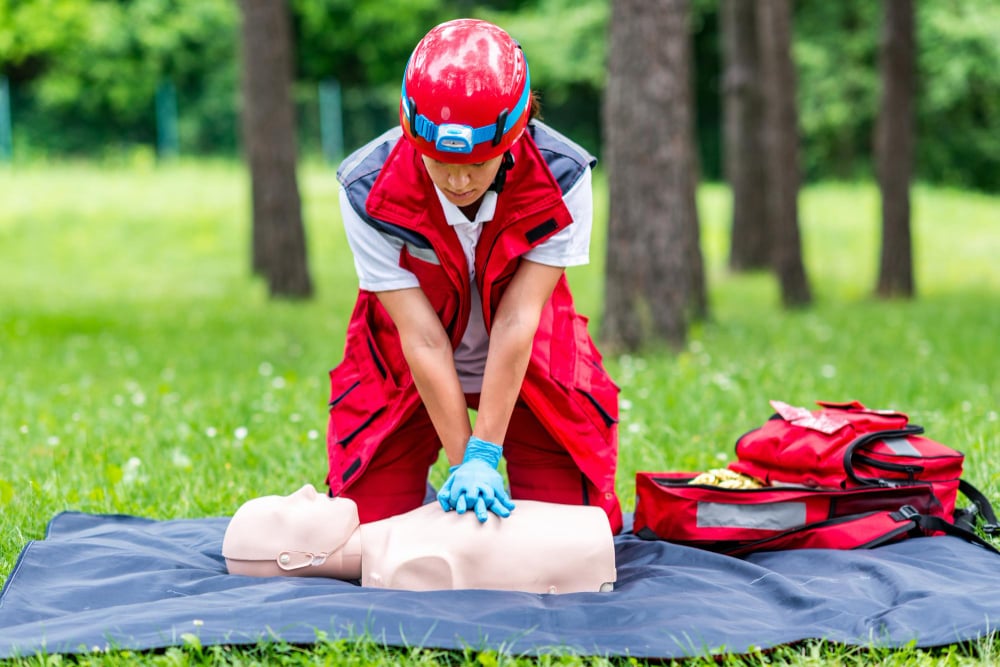
Even when you supervise well, you cannot prevent every emergency. What you can do is prepare.
Why do real emergencies “happen fast”?
In an emergency, minutes matter. When breathing or the heartbeat stops, the brain and body do not get oxygen. Waiting “to see if it gets better” can be dangerous.
CPR training helps you recognize when a situation is serious and what to do next—without panic.
Training also helps you practice the hardest part: starting. Many people #freeze because they feel unsure. CPR practice builds “muscle memory,” so your body knows what to do.
How does CPR training protect children (and staff)?
CPR training is not only about skills. It is also about confidence and teamwork.
With strong CPR training, you are more likely to:
- Notice signs of trouble #early (like gasping, no breathing, or a child who is not responding)
- Call for help quickly and clearly
- Begin care right away while waiting for emergency responders
- Use an AED if your program has one
- Keep other children safe and calm during the event
CPR and first aid training is also important because staff emergencies can happen, too. If a coworker collapses, your team needs to respond immediately.
What will child care providers learn in a CPR course?
A good CPR course teaches simple steps you can follow under #stress. Courses often include:
- How to check if a person is responsive
- When to call 911 (or your local emergency number) and what to say
- CPR skills for adults, children, and infants
- How to help with choking
- How to use an AED (Automated External Defibrillator)
- How to work as a team in an emergency
Important note: This article is not a replacement for training. Always follow your course instruction and your program’s policies.
How does CPR training support licensing and program trust?
Many licensing agencies require CPR training for child care staff. Even when it is not required, families often ask about it.
When you can say, “Our staff is CPR trained,” it builds trust because it shows:
- You take #safety seriously
- You have a plan for emergencies
- You invest in professional learning
It also supports quality. A safe program is a strong program.
What should a child care program do besides CPR training?
CPR training works best when your whole emergency system is ready. Here are practical steps you can use.
Create clear emergency roles
During an emergency, confusion wastes time. Decide ahead of time:
- Who calls 911?
- Who starts CPR?
- Who gets the AED and first aid kit?
- Who watches the other children?
- Who meets emergency responders at the door?
Practice these roles with short “what would we do?” drills.
Keep emergency items easy to reach
Make sure staff know where to find:
- First aid kit
- Gloves and barrier masks (if your training recommends them)
- Emergency contacts and child medical plans
- AED (if you have one)
Review allergies and medical plans often
For children with allergies or asthma, review:
- Where medication is stored
- Who is trained to use it
- What symptoms require immediate action
How often should providers renew CPR training?
CPR skills can fade if you never practice. Many certifications are time-limited, and rules can vary by state or agency.
A simple best practice is to:
- Track every staff member’s expiration date
- Plan renewals early, not at the last minute
- Offer refresh practice during staff meetings (even 10 minutes helps)
What can you say to staff who feel scared about emergencies?
It is normal to feel nervous. Try this supportive message: 
- “You do not need to be perfect. You need to start.”
- “Training gives you a map when your brain feels #stressed.”
- “We practice now so we can act later.”
Also remind staff: calling 911 quickly is part of helping. Doing something is better than doing nothing.
Which AID CPR courses can help you build these skills?
If you want training that fits child care needs, these AID CPR courses are directly related:
- CPR for #all-ages: CPR & AED Adult, Child, Infant - Blended Buy Now $85.00
- Child care focused first aid + CPR: Pediatric Blended First Aid & CPR/AED Adult, Child, Infant Buy Now
$85.00$80.00 - In-person skills option: Pediatric In-Person First Aid & CPR/AED Adult, Child, Infant Buy Now $95.00
One free ChildCareEd resource to support emergency readiness
Want a simple tool you can post in your staff room or add to your binder? This free resource helps you check what supplies you should have ready:
One related ChildCareEd article to read next
For more safety planning ideas, you may also like:
Follow ChildCareEd for quick safety tips
For short videos and easy tips you can share with your team, follow ChildCareEd on TikTok:
When you are CPR trained, you do not just “know CPR.” You become the person who can step in, stay calm, and help when seconds count.
