Working with young children means being ready for anything—from scraped knees to sudden medical emergencies. CPR certification gives #educators confidence, but skills fade over time. That’s why regular CPR recertification isn’t just a requirement—it’s a responsibility. Let’s dive into why staying current matters so much in #early-childhood education and supports #readiness, #safety, and #teamwork. Educators comparing training formats can review Pediatric Blended First Aid & CPR/AED Adult, Child, Infant Buy Now $85.00$80.00 and Pediatric In-Person First Aid & CPR/AED Adult, Child, Infant Buy Now $95.00. Confirm with the relevant licensing agency or employer whether a particular course is accepted for your role and program.
Why Do CPR Skills Fade Without Practice?
CPR is a psychomotor skill: knowing the sequence is not the same as being able to perform it under pressure. In an emergency, an educator must recognize the need to act, summon emergency services, begin appropriate care, and coordinate with colleagues. Training provides structured practice, while brief, repeated refreshers give teams opportunities to rehearse roles and identify uncertainties before an emergency occurs. For a broader discussion of how CPR training prepares people to respond in emergencies, read Save Lives With Skill: CPR Training. For a related overview of CPR and first aid preparation, read Be a Lifesaver, Not a Bystander: Why Getting First Aid & CPR Certified Matters More Than Ever.
Retraining is most effective when it includes active practice with timely feedback, rather than relying on passive review alone. For additional guidance on keeping first-aid skills fresh, see Pediatric First Aid for Teachers: Are Your Skills Still Fresh When an Emergency Happens?. Programs can schedule brief, spaced rehearsals between formal courses so staff retrieve the response sequence, coordinate team roles, and address technique questions with a qualified instructor. Keep these exercises distinct from credential renewal: only the certifying organization can confirm what training and assessment are required to maintain a credential. Document practice dates and follow-up needs in the program’s safety plan.
Use short, planned practice sessions to revisit the response sequence and team communication. A refresher should reinforce—not replace—hands-on instruction or the requirements of the certifying organization. Educators can:
- Review the current course materials and the emergency procedures used by their program.
- Rehearse who calls emergency services, who meets responders, and who supervises the other children.
- Practice speaking clearly and handing off relevant information to responders, using the program’s procedures.
- Ask a qualified instructor to correct technique when practice raises questions; do not treat informal rehearsal as certification.
For child-specific technique, see CPR for Infants and Children: Special Considerations and Techniques. The article can complement formal instruction, but it is not a substitute for a current course or an instructor’s feedback.
How Often Should Early Childhood Educators Renew Certification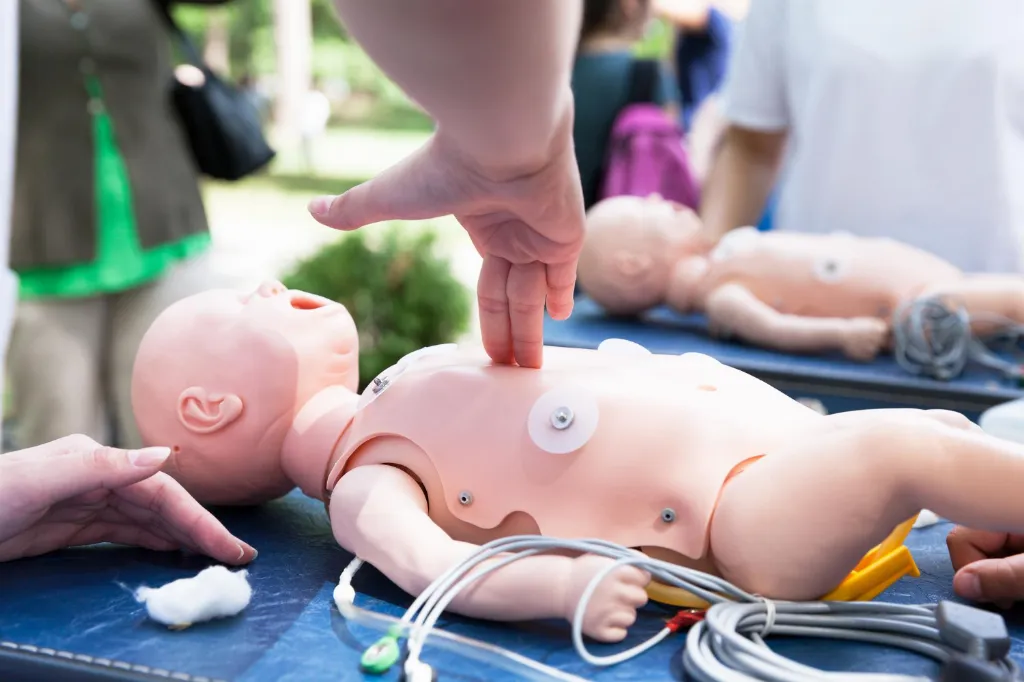 ?
The renewal interval depends on the certifying organization, the credential, and any applicable licensing or employer requirements. Check the expiration date on your card and confirm the current renewal rules with the issuing organization and your licensing agency. A renewal course maintains a credential only when it follows the issuer’s requirements; brief practice between formal courses can also help staff identify skills that need reinforcement.
What’s New in CPR Guidelines That Educators Need to Know?
CPR guidance can be revised as evidence and professional recommendations change. Do not rely on a general article to determine the latest procedure: follow the instructions taught by your current certifying organization and consult its current materials. In training, educators should be prepared to review:
-
Starting compressions immediately.
-
Maintaining 100–120 compressions per minute.
-
Using AEDs for children and infants whenever available.
Missing out on recertification could mean missing these critical updates.
What Training Options Are Best for Educators?
A suitable course depends on the learner’s credential, role, and the rules that apply to the program. Before enrolling, check the course provider’s current details and ask the relevant licensing agency or employer whether the training is accepted for the learner’s purpose. Blended, in-person, and other delivery formats may differ in how they provide and assess hands-on skills, so verify the format rather than assuming all online options are equivalent.
Compare courses using the requirements that actually apply to your position. Ask the provider and the relevant agency or employer to confirm:
- Whether the course is intended for infant, child, adult, or combined CPR, and whether that scope matches your work.
- How learners complete and demonstrate hands-on skills, and whether any in-person component is required.
- Which organization issues the credential, how long it remains valid, and what documentation is provided.
- Whether the particular course and provider are accepted for the relevant licensing, registry, or workplace requirement.
Course options and acceptance can change. Verify the current details before enrollment, and do not assume that a course automatically fulfills a state or employer requirement. For more on choosing a format, see Pediatric First Aid for Teachers: Blended or In-Person—Which Should You Choose?. Educators can also review Which First Aid Course Do Child Care Providers Need for Licensing? as a starting point for checking requirements.
Check the ChildCareEd course pages linked above for current course details and availability before enrolling.
How Can Schools Support Consistent Safety Practices?
When teams train and renew together, staff can clarify responsibilities and coordinate their response. Schools can stay organized with the Safety Checklist Program for Schools Buy Now $0.00, which helps ensure equipment, staff, and policies are always ready.
Readiness depends on more than individual certification. Each program should maintain emergency procedures suited to its setting and make sure staff know how to follow them. A routine can include assigning responsibilities, reviewing how to contact emergency services, and confirming how the rest of the group will be supervised while a response is underway. Check that emergency supplies and any available AED are accessible according to the program’s procedures, and identify how staff will direct responders to the child and location.
After a practice exercise or real incident, invite staff to identify what was clear and what needs follow-up. Record questions for a qualified trainer or the program’s designated safety lead rather than relying on informal recollection for clinical technique. For additional team-based practice ideas, see First Aid Games for Adults: 10 “What Would You Do Next?” Challenges.
Where Can Educators Find Ongoing Support and Resources?
Training is one step, but staying connected helps skills stick. Follow ChildCareEd on social media for updates, resources, and encouragement from a community of #early-childhood professionals who share your commitment to safety.
Summary: How Can Educators Stay Ready to Respond?
Check each credential’s expiration date and confirm renewal rules with the issuing organization, licensing agency, or employer that sets the applicable requirement. Choose training only after verifying its scope, format, assessment, and acceptance for your purpose. Between formal courses, use program-approved practice to rehearse team roles and communication, and direct questions about technique to a qualified instructor. These steps help educators maintain a clear, coordinated approach to child safety without confusing informal refreshers with certification.
- Save Lives with Ease: Take Your BLS Training with AidCPR this Heart Month!
- 💓Be a Lifesaver, Not a Bystander: Why Getting First Aid & CPR Certified Matters More Than Ever
- 🚨Be the Difference: Why First Aid & CPR Training Should Be Mandatory in Every School💓🎓
- Stay Sharp, Save Lives: Why CPR Recertification Is Essential in Early Childhood Education 🧸❤️
