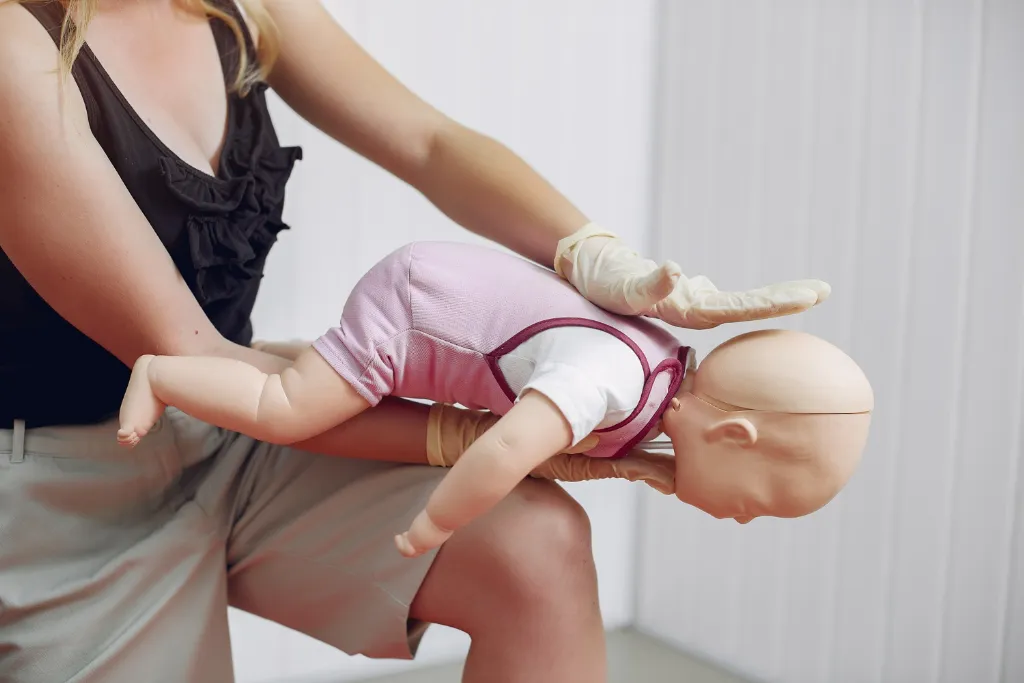
Tiny Hearts, Big Differences: Infant vs. Child CPR Every Educator Should Know 🍼❤️👧
In early childhood settings, a cardiac or breathing emergency requires a coordinated response and age-appropriate training. This overview compares infant and child CPR concepts, but it is not a substitute for a current, hands-on course or emergency-dispatch instructions. Educators can strengthen their preparation through Pediatric Blended First Aid & CPR/AED Adult, Child, Infant Buy Now $85.00$80.00 and Pediatric In-Person First Aid & CPR/AED Adult, Child, Infant Buy Now $95.00. Confirm course suitability and any applicable requirements with your licensing agency or employer.
Why Is CPR Different for Infants and Children?
Infants (younger than 1 year) and children (from 1 year to puberty) require age-specific CPR techniques; they should not be treated as smaller adults. Developmental and physiological differences inform resuscitation protocols for each age group. Educators maintain psychomotor competence through instructor-guided, hands-on training and deliberate skills practice. Effective performance depends on procedural knowledge, repeated practice, and the ability to apply learned skills during an emergency. For broader preparedness, see Pediatric and Adult First Aid and CPR Certification and Why Every Parent and Educator Should Learn Adult, Child, and Infant CPR.
How Do You Position Your Hands for Infant vs. Child CPR?
-
Infants: Use two fingers placed just below the nipple line on the breastbone.
-
Children: Use one hand for smaller children, or two hands for larger children if needed, pressing on the center of the chest.
Compression technique is age-specific and should be performed according to current training. #ChildCPR For additional context on pediatric first aid in child care, read Why Pediatric First Aid Training Is Crucial for Daycare Providers and CPR for Infants and Children: Special Considerations and Techniques.
What Are the Depth and Rate of Compressions?
-
Infants: About 1.5 inches deep, at a rate of 100–120 compressions per minute.
-
Children: About 2 inches deep, at the same rate of 100–120 compressions per minute.
The target rate is consistent across these age groups, while compression depth is adjusted for the child’s size and the technique taught in current training. Source verification needed: link this CPR guidance to a current authoritative reference after verifying that it specifically supports the age definitions, compression rate and depth described here.
How Should Educators Respond When a Toddler Needs CPR?
A toddler is in the child CPR age group described in this article, but age alone does not determine the appropriate response in every emergency. First assess the scene for hazards and check whether the child responds and is breathing normally. If the child is unresponsive and not breathing normally, activate the emergency response plan: direct a specific staff member to call 911 and bring the AED while another begins CPR if trained. If you are alone, follow the instructions of the dispatcher and the training you have received. Do not delay emergency activation while trying to determine the exact cause.
For a child care team, assign roles explicitly rather than relying on a general request for assistance. One staff member remains with the child, another contacts emergency services, and a third directs responders to the scene and retrieves relevant emergency information. This allocation of responsibilities reduces ambiguity during a time-critical response and promotes coordinated communication. Follow dispatcher directions and the steps taught in your current hands-on CPR course. If the child is breathing normally but remains unresponsive, monitor breathing continuously and follow emergency-dispatch instructions rather than beginning compressions.
When responders arrive, provide a concise handoff that covers the incident, when the child was last seen well, your observations, the interventions performed, and any relevant known medical information. Document the event according to program policy and notify the family through the designated process. These communication and documentation practices support continuity of care but do not replace emergency medical assessment.
-
Infants: Cover both the nose and mouth with your mouth and give gentle puffs.
-
Children: Pinch the nose shut and seal over the mouth to deliver a regular breath.
The appropriate ventilation technique depends on the child’s age and current training. Because incorrect instructions can affect emergency care, follow the technique taught in your certified, hands-on course and the directions of the emergency dispatcher.
How Do Rescue Breaths and AED Use Differ by Age?
If an AED is available, have someone retrieve it while emergency services are contacted and CPR is provided by a trained responder. #AED Follow the device prompts and emergency-dispatch instructions. The correct pad choice and placement depend on the device and the child; do not delay CPR while waiting for an AED.
-
Infants: Use pediatric pads if available, placing one on the chest and one on the back.
-
Children: Use pediatric pads when available and follow the AED’s instructions for pad selection and placement. If pediatric pads are unavailable, use the device directions and your current training; do not let uncertainty about pad type delay CPR or emergency activation.
When an AED is available, use it as soon as possible while continuing to follow emergency-dispatch instructions and current training.
How Can a Child Care Team Prepare for a CPR Emergency?
Preparedness depends on more than an individual’s memory of a course. #EmergencyPreparedness requires a coordinated, practiced team response. Maintain a written emergency response plan that identifies who calls 911, who retrieves the AED, who stays with the child, and who meets emergency responders. Make the plan accessible to staff, substitutes, and other adults who may be present, and clarify how supervision of the remaining children will be maintained without leaving the child in distress unattended.
Check that staff know the location of the AED and emergency supplies, how to contact emergency services at the program’s address, and where child-specific emergency information is kept. Follow the AED manufacturer’s instructions and the dispatcher’s directions during an incident. Do not assume that equipment, pads, or a particular response method are appropriate for every child; staff should use current training and device instructions.
Use brief, scenario-based exercises to rehearse communication and role assignments; these exercises supplement rather than replace formal skills training. After each exercise, identify one improvement, such as making the emergency address easier to locate or ensuring staff can identify the AED. Review the written plan after staffing or room changes and as required by program policy. A practical emergency planning aid is the Emergency Preparedness Quick-Reference Guide for Child Care Staff Buy Now $1.99.
Competence is maintained through current, hands-on practice. #CPRTraining For a team-based refresher, see First Aid Games for Adults: 10 Fun Ways to Test Your Child Care Team’s Emergency Skills. Available course options include:
Emergency readiness is a shared responsibility. A written plan, clear role assignments, and routine equipment checks help staff coordinate under pressure. For a related child care team practice resource, see First Aid Scenarios for Child Care Staff: 10 “What Would You Do Next?” Challenges.
Preparation includes knowing which training is relevant to your role and confirming current requirements with the appropriate licensing agency or employer. Read Which First Aid Course Do Child Care Providers Need for Licensing? for guidance on evaluating course requirements. Requirements can vary by location and program; do not assume that a course link alone establishes regulatory compliance.
What Should Educators Remember About Infant and Child CPR?
Infant and child CPR differ in the techniques taught for each age group, but accurate response also depends on prompt emergency activation, a functioning team plan, and practice with qualified instruction. #Resuscitation Use the age-specific approach taught in your current course, follow the AED and dispatcher instructions, and do not treat a short article as a substitute for hands-on skills training. Programs can strengthen readiness by assigning emergency roles, keeping equipment and contact information accessible, and rehearsing how staff will communicate while maintaining supervision of the other children.
For related preparation, see CPR for Infants and Children: Special Considerations and Techniques.
- Celebrate Heart Month: Learn CPR & First Aid to Protect Little Hearts!
- ❤️Then & Now: How CPR Has Evolved Over the Years
- Tiny Chests, Big Changes: What’s New in Pediatric CPR for Educators 🚑💡
- Bandages or Breaths? First Aid Kits vs. CPR Response in the Classroom 🩹❤️🩹
- Tiny Hearts, Big Differences: Infant vs. Child CPR Every Educator Should Know 🍼❤️👧
- Top 10 Child Care Injuries and How Aid CPR Training Helps
