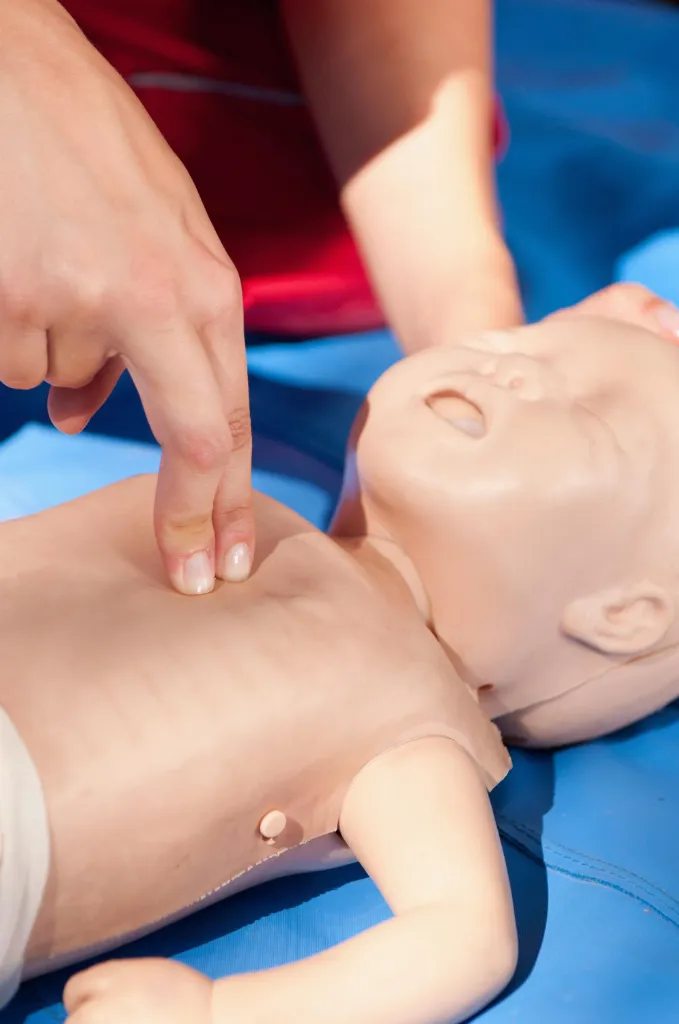
 Tiny Hearts, Big Help: What Caregivers Need to Know from the Latest AHA Pediatric BLS Update
When every second counts, caregivers and #teachers can play an important role in an emergency. This article reviews pediatric Basic Life Support (BLS) concepts and their relevance to child care settings. An effective response also depends on a clearly defined #plan and coordinated #teamwork, with staff roles established before an emergency occurs.
What Do AHA Pediatric BLS Guidelines Emphasize?
-
The foundation remains high-quality CPR: proper compression depth, correct rate, minimal interruptions, letting the chest fully recoil, and avoiding over-ventilation.
-
Breathing technique and rate depend on the responder’s training and the applicable protocol. Follow current hands-on training and emergency instructions rather than relying on an unspecified rate in this article.
-
Bag-mask ventilation vs. advanced airway: In out-of-hospital arrests, bag-mask ventilation continues to be acceptable and effective in many cases, with outcomes comparable to more invasive airway procedures.
-
Early epinephrine for non-shockable rhythms: giving epinephrine earlier after starting compressions increases survival chances.
How Should These Guidelines Inform Teachers and Caregivers?
-
Knowing the updated breathing rate helps ensure rescue breathing is more effective and reduces harm from giving too much or too little air. For practical examples of applying first aid knowledge, see First Aid Scenarios for Child Care Staff.
-
If you’re supervising children, having the training to use bag-mask ventilation correctly (or knowing when to call for help) can be critical, especially in out-of-hospital settings. For a broader overview of why these skills matter in child care, see Life-Saving Skills for Childcare Providers and Teachers: Why First Aid and CPR Matter.
-
Early recognition of arrest rhythms (shockable vs non-shockable) may not apply precisely to all caregivers, but understanding the principle of “start high-quality CPR, then epinephrine quickly for certain rhythms” can help in emergencies until medical help arrives.
How Should Child Care Staff Respond When an Infant or Child Is Unresponsive?
In an emergency, a caregiver’s initial responsibilities are to protect the group, activate the site’s emergency plan, and secure qualified assistance. Follow current training and local protocols; this article is not a substitute for hands-on CPR instruction. Check the scene for hazards, direct a designated staff member to call emergency services and retrieve the AED if available, and send another staff member to supervise the remaining children. If you are alone, follow dispatcher instructions and your training while arranging for the other children to remain in a safe, supervised location.
Responders should communicate the child’s age, observed condition, known medical information, and actions already taken. Keep a staff member available to guide responders to the child and to meet the family according to program policy. Do not delay emergency activation while searching for supplies or attempting to determine a rhythm. Emergency medical personnel make clinical decisions such as medication administration and advanced airway management.
What Should Your Emergency Supplies Include?
You don’t need fancy gear, but knowing what to have and maintaining it is vital:
-
Use the AidCPR Emergency Supply List as your guide. cpr.heart.org
-
Ensure your first aid kit includes items for breathing emergencies (masks, gloves, perhaps pocket masks), bandages, antiseptics, and AED if available. For a related checklist discussion, see Got CPR and a Well-Stocked First Aid Kit?.
-
Regularly check your supplies and replace what’s expired or used.
How Can Programs Keep Emergency Plans Usable?
A written emergency plan is operationally effective only when staff can access it promptly, understand their assigned responsibilities, and rehearse the transitions between roles. Identify who calls emergency services, who retrieves emergency supplies, who supervises the other children, and who meets responders. Keep emergency contact information and relevant child health information accessible to authorized staff in accordance with privacy procedures. Review how substitutes and newly hired staff will learn the plan.
Use brief scenario-based drills to rehearse communication and supervision responsibilities without presenting a drill as a substitute for hands-on CPR training. After a drill or real event, document what worked, identify delays or unclear assignments, and update the plan. Recheck supplies on a defined schedule, replace used or expired items, and confirm that staff know the location of the first aid kit and AED, if the program has one. For guidance on practicing emergency response skills, see How can DC early childhood classrooms stay ready with CPR and AEDs?
How Can You Develop and Refresh Emergency Response Skills?
Training is the bridge between knowledge and action. ChildCareEd’s Pediatric Blended First Aid & CPR/AED Adult, Child, Infant Buy Now $85.00$80.00 course combines online learning with hands-on skills verification and covers CPR, choking response, and first aid for emergencies involving infants, children, and adults. Course completion does not by itself establish that training satisfies a particular licensing or employer requirement; confirm acceptance with your licensing agency or employer. AidCPR also offers courses designed to help caregivers learn and practice emergency-response skills: Consider timing your training with AidCPR’s American Heart Month campaign — learn more and sign up at Be a Lifesaver This American Heart Month with AidCPR.
-
The blended First Aid & CPR course combines online work with in-person hands-on sessions. To compare pediatric first aid and CPR learning options, read Pediatric and Adult First Aid and CPR Certification.
-
The in-person First Aid and CPR course gives you live training with instructors.
These courses can strengthen professional knowledge and practical readiness; confirm with the relevant licensing agency or employer whether a specific course meets applicable requirements.
How Can Staff Review an Emergency After It Happens?
Once emergency responders assume care and immediate needs have been addressed, follow program procedures for family notification, incident documentation, and protection of confidential information. Record observable facts, the timing of key actions, who was contacted, and any follow-up instructions received. Avoid speculation or assigning blame in the incident record.
When appropriate, the team can conduct a brief debrief focused on system learning: Were roles clear? Could staff reach the emergency plan and supplies? Were children supervised throughout the response? Did communication with responders and the family proceed as intended? Use the answers to revise procedures and identify training needs. A debrief supports continuous improvement; it does not replace required reporting, medical follow-up, or review of applicable program policies.
-
For common knocks, cuts, and scrapes—check out Bumps, Bruises, and Bandaids: First Aid Every Educator Needs for Young Children.
-
For supplies, refer back to that Emergency Supply List Buy Now $0.00 to make sure your #classroom or caregiving environment is prepared.
In a pediatric emergency, the sequence and coordination of each response action matter:
-
Faster, more correct chest compressions and rescue breaths → better outcomes.
-
Early epinephrine in non-shockable rhythms can improve survival.
-
Right tools + up-to-date training + calm response = less panic, better care.
Follow AidCPR on social media for more tips, reminders, and updates. We share helpful bite-sized info, demo videos, course announcements, and encouragement for caregivers everywhere to feel ready. Be part of a community that supports #safety and lifesaving knowledge.
Summary: What Should Caregivers Remember About Pediatric BLS?
Prioritize current, hands-on training and follow your program’s emergency plan. In a crisis, protect and supervise the other children, activate emergency services, and take actions consistent with your training and dispatcher guidance. Keep supplies accessible, assign staff roles in advance, and review procedures after drills or incidents. Clinical interventions described in resuscitation guidelines may apply to trained responders and should not be treated as a substitute for caregiver training or local protocols.
- First Aid and CPR: An Investment in Community Safety
- AidCPRProcess
- Celebrate Heart Month: Learn CPR & First Aid to Protect Little Hearts!
- Save Lives with Ease: Take Your BLS Training with AidCPR this Heart Month!
- Boost Your Life-Saving Skills with BLS Training at AidCPR!
- 💓Be a Lifesaver, Not a Bystander: Why Getting First Aid & CPR Certified Matters More Than Ever
- ❤️Essential First Aid Tips Every Parent and Caregiver Should Know
- Tiny Chests, Big Changes: What’s New in Pediatric CPR for Educators 🚑💡
- Shakes, Drops & Teacher Superpowers: Handling Seizures and Emergencies in Your Classroom
- Tiny Hearts, Big Help: What Caregivers Need to Know from the Latest AHA Pediatric BLS Update
- When a Child Collapses: What Can You Do Before EMS Arrives?
- When a Baby Stops Breathing: How to Respond with Pediatric CPR
