Introduction
Cuts and scrapes happen in every child care setting. This short guide helps child care providers and directors know what to do fast and safely. You will get clear steps to stop bleeding, clean the wound, cover it, and watch for problems. It also explains when to call families or medical help. Remember: state requirements vary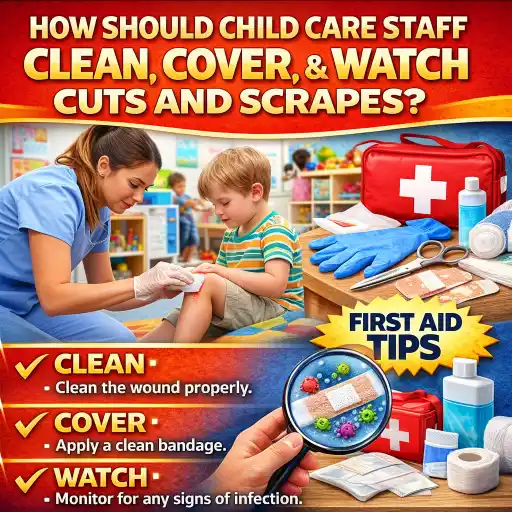 - check your state licensing agency.
Why it matters: quick, consistent care lowers the chance of #infection, helps children feel safe, and keeps your program compliant. Good habits also reduce the chance a small wound becomes a bigger problem, like an infected wound or MRSA spread, as described by the CDC.
This article focuses on practical steps you can use today. It links to helpful resources from ChildCareEd and trusted health agencies so you can train staff and build strong routines.
Key words: #cuts #scrapes #firstaid #infection #documentation
How do I treat a cut or scrape right away?
When a child is hurt, follow simple, fast steps. Use this 5-step routine every time:
- 🩹 Stop the bleeding: Apply gentle direct pressure with a clean cloth for 5–10 minutes. If blood soaks through, add another dressing on top—do not remove the first one. If bleeding is heavy or spurting, call 911. This mirrors guidance from KidsHealth.
- 💧 Clean the wound: Rinse with running water to remove dirt. You can use soap on the skin around the wound, but avoid harsh scrubbing inside the cut. Tap water is okay for irrigation: research and clinical guidance support using potable water for cleaning wounds (AAFP).
- 🧴 Protect and cover: After cleaning, apply an antibiotic ointment if your program policy allows, then cover with a sterile bandage. Change the bandage daily or when wet.
- 👀 Watch the child: Check the wound each day for redness, warmth, swelling, increasing pain, or pus. If those signs appear, seek medical care.
- 📞 Tell families: For anything beyond basic first aid (deep cuts, possible stitches, or head injuries), call the child’s caregiver right away and document the care given. ChildCareEd offers templates and tips for clear incident reports (ChildCareEd incident report guide).
Keep first aid supplies stocked and within reach. A checklist from the Red Cross or ChildCareEd's first aid kit guide can help you assemble the right items (ChildCareEd first aid kit).
When does a cut need medical care or stitches?
Not all wounds need a doctor, but some do. Use this checklist to decide when to seek medical care or stitches:
- 🔴 If the cut keeps bleeding after 10–15 minutes of firm pressure, get medical help now.
- ✂️ If the wound is deep, wide, gaping, or has an object embedded in it, it likely needs stitches. Stitches can also be needed for cuts on the face, lips, or near joints. See KidsHealth on stitches.
- 🧠 If the injury is to the head and the child is unusually sleepy, confused, vomiting, or loses consciousness, call 911 or seek emergency care.
- 🐾 Any animal or human bite should be checked by a clinician; bites can cause fast infections.
- 🩺 If the wound shows signs of infection (spreading redness, red streaks, swelling, warmth, pus, or fever), contact a health care provider. Information about wound infections and cellulitis is available from Akron Children's / KidsHealth.
If you are unsure, contact urgent care or follow your program’s emergency plan. Medical professionals decide if sutures, glue, or steri-strips are best. Clinical advice about timing for repair and safe cleaning methods appears in the AAFP review.
How can we prevent infection and document what happened?
Preventing infection and documenting care are both critical. Follow these steps:
- 🧼 Hygiene: Staff should wash hands before and after treating a wound. Use gloves when contact with blood is likely. The CDC emphasizes hand hygiene and covering wounds to prevent MRSA spread in child care settings (CDC MRSA guidance).
- 🩺 Vaccines: Make sure families know about tetanus shots. If a wound is from a dirty or rusty object and you’re unsure of vaccination status, suggest a medical check for possible tetanus booster (KidsHealth).
- 📋 Document clearly: Use a simple incident report that lists: child name, time, location, what happened, first aid given (what + who + time), who supervised, and family notification. ChildCareEd provides a step-by-step guide and templates for documenting incidents (ChildCareEd incident report guide).
- 🚫 Isolation of open wounds: Keep wounds covered while at the center. Children with wounds that are draining and can’t be contained should not attend until treated, per CDC school guidance (CDC).
- 🔁 Follow-up: Re-check the wound daily and update documentation. If infection signs appear, call the child’s family and recommend medical evaluation.
Good documentation builds trust with families and helps your team follow licensing rules. For program leaders, ChildCareEd’s recordkeeping article explains what to include and when to notify families and licensing (ChildCareEd).
You can also visit BBP (Bloodborne Pathogens) and Pediatric Blended First Aid & CPR/AED Adult, Child, Infant, since both support safe response to cuts and scrapes through infection prevention, exposure response, and pediatric first aid training.
What common mistakes should we avoid and how do we prepare our program?
Common errors often make small wounds worse. Avoid these pitfalls and prepare your team:
- ⚠️ Don’t wait to write the report. Write incident notes the same day while details are fresh. ChildCareEd advises same-day documentation for accuracy (ChildCareEd).
- ❌ Don’t remove an item stuck in a wound—stabilize and seek medical help.
- 🧯 Don’t use home remedies (like butter or unknown creams) on open wounds. Use clean water and approved ointments only.
- 🔁 Avoid inconsistent bandage changes—check daily and after play or diaper changes.
Program preparedness checklist (easy to follow):
- 🧰 Maintain a stocked first aid kit and check it monthly. Use Red Cross or ChildCareEd lists to fill yours (Red Cross, ChildCareEd).
- 🎓 Train staff in pediatric first aid and CPR and refresh regularly. The Red Cross and ChildCareEd offer courses tailored for child care teams (Red Cross training, ChildCareEd training overview).
- 📅 Practice incident response and family-notification drills so staff know roles and wording.
- 📂 Keep documentation secure but accessible to authorized staff only.
Conclusion
Clean, cover, and watch is a simple routine that protects children and gives staff confidence. Use the steps above, keep your first aid kit ready, train staff, and document clearly. When in doubt about a wound, seek medical help and contact the family. For practical templates and training, ChildCareEd has helpful resources on first aid, incident reporting, and staff training (ChildCareEd).
State rules differ—state requirements vary - check your state licensing agency. Staying calm, consistent, and informed helps you care for children safely and professionally.
Quick FAQ
- Q: How long should I watch a wound before removing the bandage? A: Change the bandage daily and once a scab forms you may leave the wound uncovered if clean and dry.
- Q: Do we always tell families? A: Tell families for medical care beyond basic first aid or when your policy requires it. When in doubt, call—transparency builds trust.
- Q: When is tetanus a worry? A: For deep punctures or dirty objects; check vaccination status and suggest medical advice (KidsHealth).
- Q: Can a child with a covered wound attend? A: Usually yes if the wound is contained and not draining (CDC).
