Latest Blog & News in English
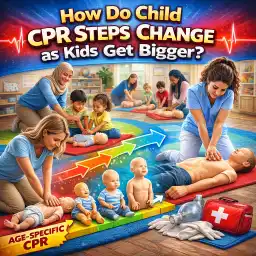
How Do Child CPR Steps Change as Kids Get Bigger?
02/27/2026Introduction As a child care provider you want to know the right steps when a child needs help. This guide explains how #CPR changes as children grow from #infants to bigger #children. It is written for busy directors and teachers in easy language. We include clear numbers, quick lists you can scan... How Do Child CPR Steps Change as Kids Get Bigger?
How should childcare providers handle choking first aid for toddlers and preschoolers?
02/20/2026Introduction Choking can happen fast with curious little kids. As a #childcare provider you must know how to spot trouble, give quick #firstaid, and keep kids safe. This article explains what to watch for, what to do right away, how to prevent choking, and common mistakes to avoid. For training and... How should childcare providers handle choking first aid for toddlers and preschoolers?

How can childcare programs prevent drowning and handle emergencies on water play days?
02/20/2026Introduction Water play is fun for kids. It helps them learn and cool off. But water can be dangerous. As a #childcare provider, you must plan so play is safe. This guide gives clear steps for preventing #drowning and what to do in an emergency on water play days. Why it matters: 1) Drowning happ... How can childcare programs prevent drowning and handle emergencies on water play days?

Infant CPR Steps: A Simple Guide for Child Care Providers
02/06/2026What counts as “infant CPR,” and when do you use it? Infant CPR is for babies under 1 year old. You use it when a baby is unresponsive (does not wake up) and is not breathing normally (not breathing or only gasping). What should you do first in a child care setting? Before you s... Infant CPR Steps: A Simple Guide for Child Care Providers

Incident Reports After Medical Emergencies: What to Document
01/22/2026What is an incident report, and why does it #matter after a medical emergency? An incident report is a written record of what happened. After a medical emergency, it helps everyone stay on the same page—families, staff, licensing, and health professionals. A good report is: Clear Factual... Incident Reports After Medical Emergencies: What to Document

What should you do if an infant is unresponsive in the crib at child care?
01/08/2026What does “unresponsive” mean, and why does it matter? “Unresponsive” means the baby does not react when you talk, touch, or gently tap. The baby may look limp, very still, or “not like themselves.” If an infant is unresponsive and not breathing (or only gasping)... What should you do if an infant is unresponsive in the crib at child care?

Why CPR training matters in child care (real emergencies happen fast)
01/08/2026What kinds of emergencies can happen in child care? Young children are still #learning how to eat, move, and explore #safely. That means some risks are common in group care. Emergencies can include: Choking during meals or snack Breathing trouble from #asthma or allergies A sudden collapse or ... Why CPR training matters in child care (real emergencies happen fast)

Why Is CPR So Important in Child Care Settings?
12/30/2025Cardiopulmonary resuscitation (CPR) is a life-saving skill. In child care settings, emergencies can happen without warning. A child may #choke, stop breathing, or collapse. When this happens, your actions matter. CPR helps keep blood and oxygen moving to the brain and body until med... Why Is CPR So Important in Child Care Settings?

What Is Asthma and Why Is It Common in Child Care?
12/23/2025Asthma is a long-term breathing condition that affects many children. It causes the airways in the lungs to swell and tighten. This makes it hard to breathe. In child care settings, #asthma is common because many young children are still #learning how to manage their symptoms. Some ... What Is Asthma and Why Is It Common in Child Care?

When to Call Parents: Managing Illness in the Winter Months ❄️⛄
12/22/2025When winter arrives, coughs, colds, and #fevers often arrive too. In child care settings, illness can spread quickly, especially when children are indoors more often. Knowing when to call #parents is an important skill for child care professionals. Clear decisions help keep children ... When to Call Parents: Managing Illness in the Winter Months ❄️⛄
