AEDs in Public Places: How to Use One in an Emergency
In a public venue, one person can call emergency services while another retrieves the AED and a third begins CPR. If you are alone, call 911, use speakerphone when possible, and follow the dispatcher’s directions. Do not leave the person unattended to search for an AED unless the dispatcher directs you to do so or one is immediately accessible.
A sudden collapse in a busy shopping mall illustrates the importance of a coordinated emergency response. When cardiac arrest is suspected, promptly activate emergency services, initiate CPR when indicated, and apply an AED as soon as it is available.
Why Are AEDs Important in Public Places?
AEDs are now a common sight in places like airports, gyms, offices, and schools—and for good reason. When sudden cardiac arrest strikes, time is critical. AEDs help restore a normal heart rhythm and are most effective when used within the first few minutes. This fast response is a key part of the Chain of Survival—a proven process for improving survival rates in emergencies. For a closer look at how early CPR and AED use fit into that response, read what everyone should know about CPR.
What Should You Do When Someone Collapses?
-
Is the scene #safe? Can you call for help?
Ensure your safety first. Then call 911 immediately and ask someone nearby to bring the AED. -
When should CPR begin?
If the person is unresponsive and is not breathing normally or is only gasping, begin chest compressions at 100–120 per minute in the center of the chest. Follow the dispatcher’s instructions and continue until the AED is ready or responders take over. -
How should the AED be operated?
Power on the device and follow its voice prompts. Expose the chest and apply the electrode pads as illustrated, typically one on the upper right and the other on the lower left. -
How does the AED determine whether a shock is indicated?
The AED analyzes the heart rhythm and indicates whether a shock is advised. If prompted, confirm that no one is touching the person, then press the shock button as directed. -
What happens after the shock?
Resume CPR immediately. Keep going until emergency responders arrive or the person shows signs of life.
How Can You Use an AED Safely?
- Expose and dry the chest so the electrode pads adhere; move clothing aside and wipe away moisture. If the chest is wet, make sure the person is no longer in standing water before using the AED.
- Follow the pad diagrams and the device’s prompts. If a second responder is present, have them continue CPR while you prepare the AED, then pause compressions only when the device directs you to stand clear for analysis or a shock.
- Make sure no one touches the person during analysis or shock delivery. Afterward, resume CPR immediately when prompted; the AED will reassess the rhythm and guide any next steps.
- Keep the AED attached and follow its instructions until emergency medical services take over or the person shows clear signs of life. If the person is breathing normally but remains unresponsive, place them in a recovery position if safe to do so and continue monitoring their breathing.
- Do not delay using an AED because you are worried about making a mistake. Turn it on, follow the voice prompts, and let the device determine whether a shock is advised.
How Can a Venue Prepare for an AED Emergency?
Preparation makes the response more coordinated. Identify where AEDs are located, make sure signs point to them, and keep access clear during operating hours. Assign staff roles in advance: one person calls emergency services, another retrieves the AED, and another begins CPR. If only two people are available, the dispatcher can help coordinate the response.
During a drill, practice giving a clear location to the dispatcher, sending someone to meet responders, and directing bystanders away from the person. Check the AED’s readiness indicator and inspect pads and batteries according to the manufacturer’s instructions and the venue’s maintenance plan. Replace expired or used supplies promptly, and record inspections so staff can confirm the device is ready.
For child care teams, include the AED location and emergency communication steps in the site’s emergency procedures. Staff can also review this guide to CPR and AED preparedness in early childhood classrooms for additional planning ideas. Review who is responsible for calling emergency services and supervising the other children, while maintaining the person’s privacy and ensuring responders can reach the scene. Rehearse the plan periodically and after staffing or layout changes. These steps support readiness; they do not replace hands-on CPR/AED practice or local emergency procedures.
-
Let the AED guide you—it’s designed for use by untrained bystanders.
-
Do not touch the victim while the AED is analyzing or delivering a shock.
-
If the person begins breathing or regains consciousness, roll them onto their side and stay close until EMS arrives.
How Can Training Prepare You to Respond?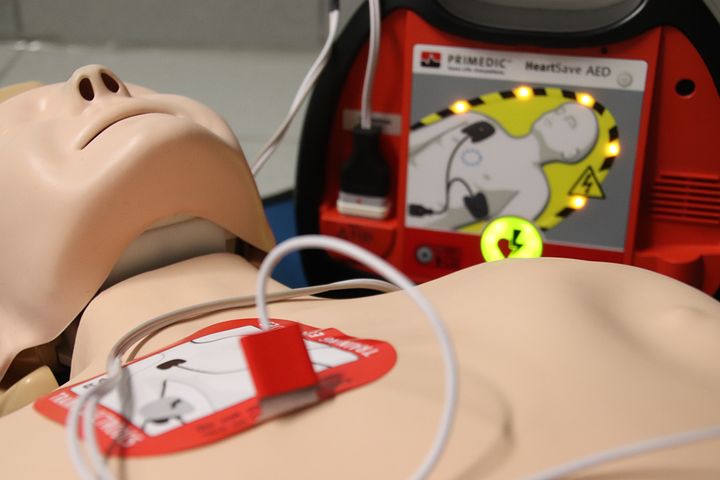
Whether you are a concerned parent, #teacher, coach, or #healthcare provider, training can build confidence and help responders practice coordinated actions. Child care teams can also review why first aid and CPR training matters for teachers and parents. AidCPR offers several courses designed for your needs. Learn more about why learning CPR with AidCPR could save a life and how these courses prepare you to act when it matters most.
-
Adult Only CPR, AED, and Adult First Aid (Blended) Buy Now
$85.00$80.00 – Focused training for adult-related emergencies. -
Adult/Child CPR, AED & Adult First Aid (Blended) Buy Now $85.00 – For those who work with both adults and children.
-
Pediatric First Aid & CPR/AED (Blended) Buy Now
$85.00$80.00 – Perfect for childcare providers and #parents. -
CPR & AED for Adult, Child, Infant — In‑Person Buy Now $90.00 – Learn how to respond to cardiac emergencies at any age.
-
Basic Life Support (BLS) for Healthcare Providers (Blended) Buy Now $85.00 – Advanced certification for those in the medical field.
Each course combines online learning with in-person, instructor-led skills sessions. Course format and suitability vary, so check the course details and confirm any workplace or local training expectations. Read more about preparing for first aid and CPR training before selecting a course.
Summary: What Should You Remember About AED Use?
